
Open-Ended Building Toys Inspire Inventive Play
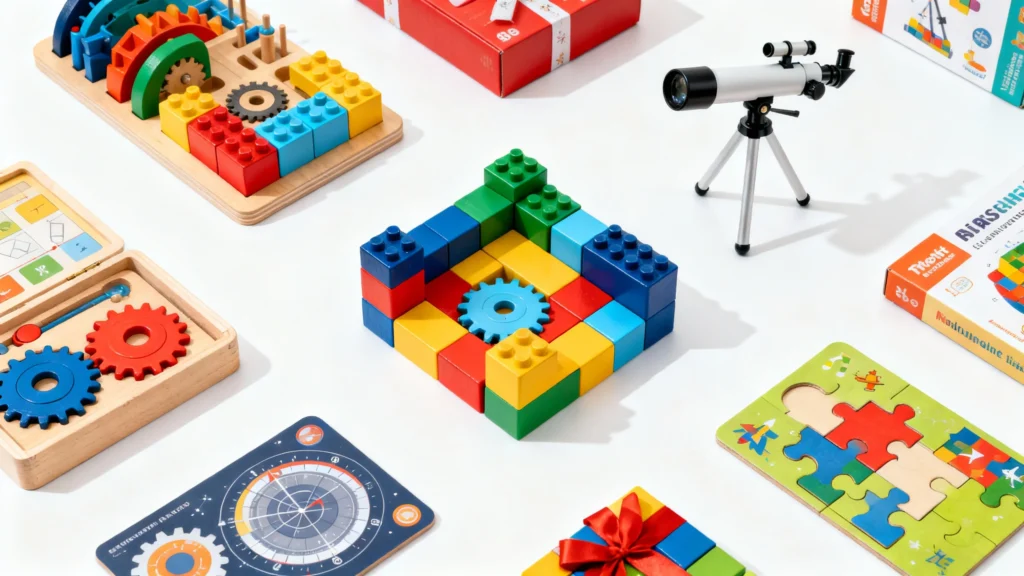
When we think about the best gifts for future scientists and engineers, open-ended building toys are always at the top of our list. These toys invite toddlers to experiment, design, and create—skills that are at the heart of scientific thinking and engineering. What sets these toys apart is their flexibility: there’s no single “right” way to play, which means kids can follow their curiosity and invent new solutions every time they build.
Research and expert reviews consistently highlight that open-ended play is a powerful way for young children to develop critical thinking, spatial reasoning, and problem-solving skills [1][3]. For example, classic building blocks, magnetic tiles, and interlocking construction sets all encourage kids to test ideas, make predictions, and learn from trial and error. These are the same habits of mind that scientists and engineers use every day.
We’ve seen firsthand how a simple set of blocks can become a rocket, a bridge, or a fantastical creature—sometimes all in the same afternoon. The best building toys for toddlers are sturdy, safe, and sized for little hands, but they also leave plenty of room for imagination. Magnetic tiles, for instance, are endlessly versatile: toddlers can snap them together to build towers, tunnels, or geometric patterns, exploring the basics of magnetism and geometry as they play [1][3].
Another favorite among educators and parents is the humble set of wooden blocks. These timeless toys help children develop fine motor skills and spatial awareness, and they’re durable enough to last through years of creative play. Some sets even introduce basic engineering concepts, like arches and cantilevers, in a way that feels like pure fun.
For families looking to add a bit of motion and cause-and-effect learning, marble runs and simple gear sets are fantastic choices. These toys let toddlers experiment with gravity, momentum, and mechanical connections, all while building structures that move and change. The process of tweaking a marble run to get the ball to the finish line is a hands-on lesson in iteration and problem-solving—core skills for any future inventor [1][4].
We also love construction sets that incorporate elements of real-world engineering, such as bolts, wheels, and pulleys. These toys introduce basic mechanical principles and encourage kids to build machines that actually work. The satisfaction of seeing a homemade car roll across the floor or a simple crane lift a block is a powerful motivator for further exploration.
Ultimately, the best building toys are those that grow with your child, offering new challenges and possibilities as their skills develop. They’re not just toys—they’re launchpads for creativity and lifelong learning.
Here’s what we love:
Best Building Sets for Little Engineers
Early Science Kits and Nature Exploration Tools Make Learning Tangible
For toddlers who are endlessly curious about the world, early science kits and nature exploration tools make the invisible visible and the abstract concrete. These gifts are designed to nurture a sense of wonder, helping children observe, question, and experiment—just like real scientists.
The best science kits for toddlers are simple, safe, and hands-on. Think of kits that let kids mix colors, watch seeds sprout, or explore the properties of water. These activities introduce foundational concepts in chemistry, biology, and physics in a way that’s accessible and engaging for young minds [1][4]. For example, a seed-growing kit lets children witness the magic of germination, teaching them about plant life cycles and the basics of botany. Watching roots and shoots emerge day by day is a lesson in patience, observation, and the scientific method.
Nature tools like magnifying glasses, bug viewers, and child-friendly binoculars encourage kids to explore their environment with fresh eyes. These tools transform a walk in the backyard or a trip to the park into a mini field expedition, where every rock, leaf, and insect becomes a subject of investigation. By encouraging close observation and gentle handling, these gifts foster respect for living things and a deeper connection to the natural world [4].
Simple science experiment kits that focus on sensory play—such as mixing safe household ingredients to create fizzing reactions or exploring textures and temperatures—are also wonderful for this age group. These kits help toddlers develop hypothesis-testing skills (“What will happen if…?”) and learn to make predictions based on evidence, which are the building blocks of scientific thinking [1].
We’re also big fans of measurement and sorting games that introduce early math concepts. Toys that let kids compare sizes, weigh objects, or sort by color and shape help lay the groundwork for later math and engineering skills. Games that involve measuring length or volume, even in a playful way, make abstract ideas tangible and fun [4].
For families who want to nurture a love of the outdoors, gardening kits and simple weather stations are excellent choices. Planting seeds, watering them, and watching them grow teaches responsibility and the basics of ecology. Weather kits that let kids track rain, wind, or temperature turn daily routines into opportunities for data collection and analysis.
What we love most about these gifts is how they turn everyday moments into opportunities for discovery. Whether it’s spotting a ladybug, mixing colors, or measuring rainfall, these experiences help toddlers see themselves as capable explorers and problem-solvers.
Parents are loving these:
Top Science & Nature Kits
Bath and Water Play Unlock Everyday STEM Discoveries
Bath time is more than just a routine—it’s a laboratory for STEM learning. Water play offers endless opportunities for toddlers to experiment with cause and effect, explore basic physics, and develop fine motor skills. The best bath toys for budding scientists and engineers are those that invite hands-on investigation and open-ended play.
STEM-focused bath toys can transform the tub into a space for discovery. For example, toys that let kids pour, scoop, and transfer water help them understand concepts like volume, buoyancy, and flow. The Pluï Rain Cloud, for instance, is a favorite for demonstrating how water can be held and released, introducing the basics of air pressure and gravity in a way that’s both visual and tactile [2]. Watching water pour through different spouts or pipes encourages toddlers to make predictions and test their ideas—just like scientists at work.
Building sets designed for the bath, such as suction-cup pipes and gears, let kids create their own water courses and observe how water moves through different pathways. These toys are fantastic for exploring engineering principles like flow direction, speed, and the effects of obstacles [2]. By rearranging the pieces, toddlers can experiment with different designs and see immediate results, reinforcing the value of iteration and experimentation.
We also appreciate bath toys that introduce simple machines and motion. Submarine sprayers and floating boats with moving parts encourage kids to explore propulsion, water resistance, and basic mechanics. These toys are not only fun but also help develop hand-eye coordination and problem-solving skills as children figure out how to make things move or float [2].
For families who want to extend STEM learning beyond the bath, water tables and outdoor splash toys offer similar benefits. These setups allow for larger-scale experiments with pouring, measuring, and floating, and they’re perfect for group play and collaborative problem-solving.
What makes water play so powerful is its immediacy—toddlers can see, feel, and manipulate the results of their actions in real time. This kind of active learning is exactly what developmental psychologists describe as essential for young children’s growth: kids learn best when they can experiment freely and see the consequences of their choices [1][2].
Bath and water play toys are also easy to clean and often dishwasher-safe, making them a practical choice for busy families. Plus, they turn an everyday routine into a highlight of the day, filled with laughter, learning, and discovery.
Worth checking out:
Favorite STEM Bath Toys
Books and Story-Based Toys Celebrate Science and Engineering Role Models
While hands-on toys are essential, we also believe that books and story-based toys play a crucial role in nurturing future scientists and engineers. Stories introduce children to the people, ideas, and adventures that make science and engineering exciting. They help toddlers see themselves as part of a larger world of discovery and innovation.
The best science-themed books for toddlers feature engaging stories, vibrant illustrations, and relatable characters who ask questions, solve problems, and explore the unknown. Books that highlight real-life scientists and engineers from diverse backgrounds are especially valuable, as they provide role models and show that anyone can be a creator or inventor [4]. Titles that explain big ideas in simple, playful language—like how coding works or what engineers do—help demystify complex concepts and spark curiosity [4].
We’re also fans of interactive storybooks and toys that combine narrative with hands-on elements. For example, story-based building sets let kids follow along with a character’s adventure while constructing scenes or solving challenges. These toys blend the power of storytelling with the benefits of open-ended play, encouraging children to think creatively and make connections between ideas.
Graphic novels and picture books that weave in scientific concepts—such as circuits, weather, or animal behavior—can make learning feel like an adventure. When toddlers see characters experimenting, building, or exploring, they’re more likely to try these activities themselves. Books that include simple experiments or prompts for real-world exploration are especially engaging, as they invite families to continue the story through hands-on play [4].
Representation matters, too. Books and toys that feature scientists and engineers of all genders, races, and abilities help every child see themselves as a potential innovator. This sense of belonging is a powerful motivator for lifelong learning and confidence in STEM fields [4].
We also recommend story-based games and puzzles that introduce early coding, logic, or sequencing skills. These activities help toddlers develop pattern recognition and logical thinking in a playful, low-pressure way.
Ultimately, books and story-based toys are about more than just information—they’re about inspiration. They help children imagine what’s possible and encourage them to ask, “What if?” That sense of wonder is the foundation of every great scientific and engineering breakthrough.
Ready to shop?
Inspiring Science Books
Curious, thoughtful gifts can spark a love of discovery that lasts a lifetime. Whether you choose building sets, science kits, water toys, or inspiring books, the best gifts for future scientists and engineers are those that invite children to explore, experiment, and imagine. Here’s to raising the next generation of innovators—one joyful discovery at a time.
Sources
[1] Learning Toys and STEM Toys We Love | Reviews by Wirecutter — https://www.nytimes.com/wirecutter/reviews/learning-toys-and-stem-toys-we-love/
[2] 5 super cool STEM bath toys to help create future scientists — https://coolmompicks.com/blog/2017/01/14/stem-science-based-bath-toys/
[3] 33 Best STEM Toys for Kids | The Strategist — https://nymag.com/strategist/article/best-stem-toys-for-kids.html
[4] The Ultimate Holiday STEM Gift Guide (aka What Engineers Are … — https://www.forbes.com/sites/taliamilgromelcott/2023/11/27/the-ultimate-holiday-stem-gift-guide-aka-what-engineers-are-buying/
[5] The Best STEM Toys for Toddlers — https://www.thebump.com/a/stem-toys