
Gifts That Build Safety Awareness and Confidence
Helping kids understand the world around them starts with teaching them how to navigate it safely. We believe that safety education can be empowering, not anxiety-inducing, when approached thoughtfully. Books and toys that introduce real-world scenarios in a gentle, age-appropriate way can spark important conversations and build confidence.
One standout resource is the picture book When Lyla Got Lost (and Found), which tells the story of a young girl who becomes separated from her caregiver in a store. Through engaging illustrations and a reassuring narrative, the book introduces practical safety strategies—like memorizing a parent’s phone number and knowing whom to ask for help—without overwhelming young readers. What we love most is how it opens the door for families to discuss “what if” situations in a calm, supportive environment. This kind of story-driven learning helps kids internalize safety tips while feeling secure and understood [1].
Safety education isn’t just about emergencies; it’s also about building self-advocacy and emotional resilience. Books that address topics like body autonomy and consent, such as Miles is the Boss of His Body, can help children recognize their boundaries and communicate confidently. These resources are especially valuable for preschoolers and early elementary kids, who are just beginning to navigate social settings independently.
We also encourage parents to look for interactive toys and games that reinforce safety concepts through play. For example, role-play kits with pretend phones, walkie-talkies, or community helper figures can make practicing safety scenarios feel like a game rather than a lecture. When kids are actively involved, they’re more likely to remember what they’ve learned and apply it when needed.
Finally, don’t underestimate the value of open conversation. Reading together, acting out scenarios, and encouraging questions all help kids process new information and build the confidence to handle unexpected situations. The goal isn’t to instill fear, but to equip children with the tools they need to feel safe and empowered as they explore their world.
Here’s what we love:
Smart Safety Starters
Learning Toys That Inspire Curiosity and Problem-Solving
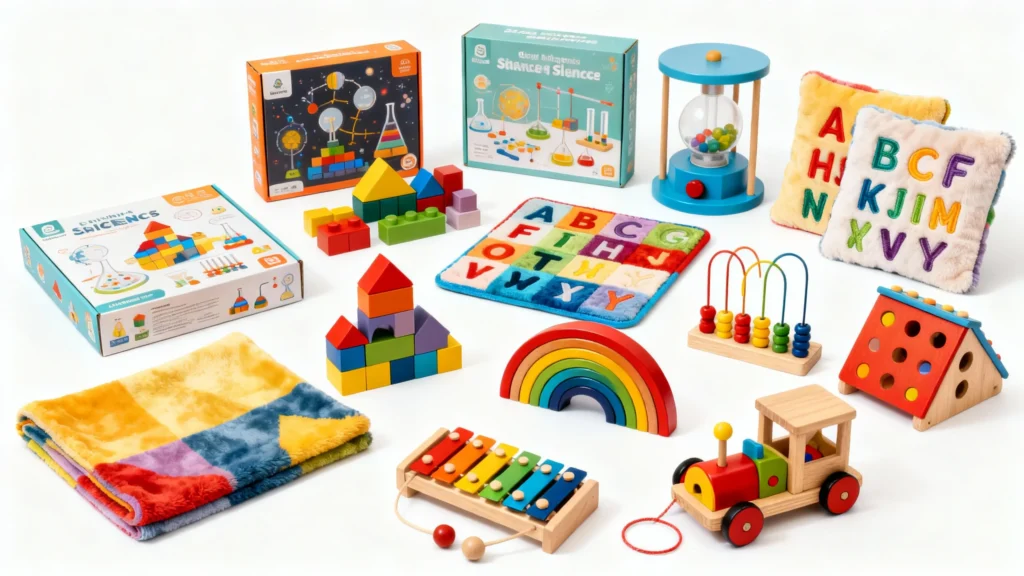
The best educational gifts are those that invite kids to experiment, tinker, and ask “what if?” We’re big believers in open-ended learning toys—the kind that don’t dictate a single way to play, but instead encourage creativity, logic, and hands-on discovery. Research shows that when children engage with toys that let them explore, they’re acting a lot like scientists running experiments, learning how the world works through trial and error [2].
Building sets, such as magnetic tiles or classic blocks, are perennial favorites for a reason. They foster spatial reasoning, fine motor skills, and collaborative play. Kits that introduce basic engineering concepts—like marble runs, gears, or simple machines—let kids see cause and effect in action. These toys grow with children, offering new challenges as their skills develop.
For kids who are fascinated by technology, robotics kits and beginner-friendly coding toys are a fantastic way to introduce programming concepts without screens. Many of these sets use color-coded blocks or simple commands to teach sequencing, logic, and problem-solving. The key is to choose options that are age-appropriate and flexible, so kids can experiment and invent their own solutions.
We also love games and puzzles that encourage critical thinking and strategy. Board games that require planning, pattern recognition, or teamwork help kids develop patience and resilience. Look for games with adjustable difficulty levels or cooperative play modes, so the whole family can join in and learn together.
When selecting learning toys, we prioritize those that are durable, safe, and adaptable. The best picks are ones that kids return to again and again, discovering something new each time. As educators and child development experts have noted, these kinds of toys don’t just teach academic skills—they nurture curiosity, perseverance, and a lifelong love of learning [2].
Parents are loving these:
Inspiring STEM Builders
Creative Play and Sensory Gifts for Growing Minds
Imagination is a powerful engine for learning, and creative play is where kids make sense of the world. Gifts that encourage artistic expression, music-making, and sensory exploration help children develop not just cognitive skills, but also emotional intelligence and self-confidence.
For toddlers and preschoolers, sensory toys—like textured balls, stacking cups, or busy boards—offer endless opportunities to explore through touch, sound, and movement. These toys support fine motor development and help kids learn to focus their attention. Sensory play is also linked to language growth and social skills, as children describe what they’re experiencing and share discoveries with caregivers [5].
Art supplies designed for little hands, such as palm-grip crayons, washable finger paints, and large paper rolls, invite kids to experiment without fear of making mistakes. Open-ended materials like modeling clay, building dough, or magnetic drawing boards encourage creative risk-taking and problem-solving. For older kids, more structured kits—like beginner sewing sets, simple woodworking projects, or DIY science experiments—can channel their interests into new skills.
Music toys, from simple shakers to mini keyboards, introduce rhythm and pattern recognition. Even very young children benefit from making music, which supports auditory processing and memory. Instruments that are easy to play and durable enough for enthusiastic use are always a hit.
Don’t forget the power of pretend play. Dress-up clothes, puppet theaters, and play kitchens let kids act out stories, practice social roles, and build empathy. These experiences lay the groundwork for communication, negotiation, and emotional regulation—skills that will serve them well in every area of life.
When choosing creative and sensory gifts, we look for items that are safe, non-toxic, and easy to clean. The best options invite open-ended play, adapt to different ages, and encourage kids to follow their curiosity wherever it leads [5].
Worth checking out:
Creative Play Favorites
Digital Tools and Apps That Make Learning Fun and Accessible
In today’s world, screens are part of the learning landscape—but not all digital experiences are created equal. We seek out apps and games that turn screen time into meaningful, interactive learning, rather than passive consumption. The best digital tools are those that encourage kids to think, create, and connect with others.
One standout is the Bedtime Math app, which transforms math into a daily family ritual. Instead of rote drills, the app offers story-based word problems at multiple difficulty levels, making math feel like a shared adventure. Research has shown that using Bedtime Math not only boosts kids’ math performance, but also helps parents overcome their own math anxiety, creating a positive learning environment for everyone [4].
For visual learners, apps like Kahoot! Numbers by DragonBox use playful characters and interactive challenges to build number sense and arithmetic skills. These digital manipulatives mirror the hands-on tools teachers use in classrooms, helping kids grasp abstract concepts through concrete play. As children progress, the DragonBox series expands to cover topics like algebra and geometry, making it a resource that grows with them [4].
Coding apps designed for beginners, such as Lightbot and Lightbot Jr, introduce the basics of programming logic through puzzles and games. These tools don’t require prior coding knowledge and are accessible even to young children, making them a great entry point for families interested in technology. Experts recommend treating coding apps as a collaborative activity, where adults and kids can solve challenges together and learn from each other [4].
When evaluating digital gifts, we prioritize privacy, age-appropriate content, and ease of use. The best apps are those recommended by educators, tested by families, and designed to encourage active participation. We also appreciate platforms that offer parental controls and guidance, so caregivers can stay involved and support their child’s learning journey.
Digital tools can be especially valuable for kids with different learning needs, offering customizable experiences and alternative ways to engage with material. Whether your child is a budding mathematician, a curious coder, or a creative storyteller, there’s a world of high-quality apps and games ready to support their growth [4].
Ready to shop?
Top Learning Apps
Choosing gifts that are safe, educational, and genuinely engaging is one of the most rewarding parts of parenting. When we select presents that nurture curiosity, build confidence, and invite creativity, we’re giving kids tools to thrive in a complex world. We hope this guide helps you discover new favorites that will inspire your child’s next big adventure.
Sources
[1] When Lyla Got Lost (and Found): A great safety book for kids — https://coolmompicks.com/blog/2015/05/24/lyla-got-lost-found-really-helpful-safety-book-kids/
[2] Learning Toys and STEM Toys We Love | Reviews by Wirecutter — https://www.nytimes.com/wirecutter/reviews/learning-toys-and-stem-toys-we-love/
[3] How do I know if a college will be safe for me? — https://coolmompicks.com/blog/2024/06/18/how-to-tell-if-a-college-is-safe-environment-for-me/
[4] Some of the Best Online Learning Games for Kids | Reviews by Wirecutter — https://www.nytimes.com/wirecutter/reviews/our-favorite-learning-apps-for-tablets-and-smartphones/
[5] The 50 Best Gifts for 1-Year-Olds in 2025, According to Parents — https://www.parents.com/toddlers-preschoolers/development/growth/first-birthday-gift-ideas/