
Open-Ended Science Kits and Experiments Foster Curiosity
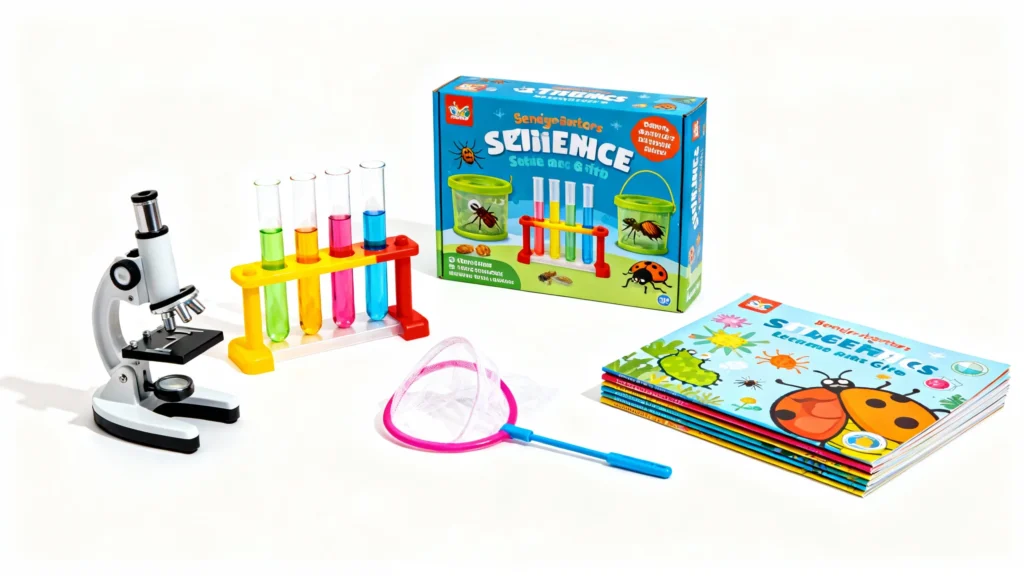
Kindergarteners are natural scientists, always asking “why?” and “how?” about the world around them. The right science kits and experiment sets can channel this curiosity into hands-on exploration, making abstract concepts tangible and memorable. At this age, open-ended kits are especially valuable because they invite kids to tinker, test, and discover at their own pace, rather than simply following instructions to a single outcome. This kind of play closely mirrors the scientific method, encouraging children to make predictions, observe results, and draw conclusions—skills that will serve them well in school and beyond [1][3].
We’ve found that the best science kits for this age group are those that balance guided activities with plenty of room for experimentation. For example, kits that explore magnetism, color mixing, or simple chemistry let kids see real cause-and-effect in action. Many of these sets use everyday materials, which helps children connect what they’re learning to their daily lives. For parents, these kits are a wonderful way to introduce the basics of scientific inquiry—hypothesizing, testing, and observing—without requiring a PhD in chemistry to supervise.
Safety is always a priority, so we look for kits that use non-toxic materials and include clear instructions for adult helpers. We also appreciate when kits come with reusable components, so kids can repeat experiments or invent their own variations. Some of our favorite sets include tools like magnifying glasses, droppers, and test tubes, which encourage kids to act like real scientists and build confidence in their abilities.
Open-ended science kits don’t just teach facts—they nurture a mindset of curiosity and resilience. When a volcano doesn’t erupt as expected or a color doesn’t mix the way they thought, kids learn to ask new questions and try again. This process is at the heart of both science and learning itself [1][3]. And let’s be honest: there’s something magical about watching a child’s face light up when their baking soda volcano bubbles over or their homemade slime stretches for the first time.
Here’s what we love:
Favorite Science Kits
Building and Engineering Toys Develop Problem-Solving Skills
When it comes to school readiness, few gifts are as powerful as building and engineering toys. These tools do more than just keep little hands busy—they lay the groundwork for critical thinking, spatial reasoning, and perseverance. As children snap together blocks, connect gears, or design marble runs, they’re not just playing; they’re learning to plan, test, and revise their ideas, which are essential skills for both science and everyday life [1][2].
We’re especially drawn to toys that are open-ended and flexible, allowing for endless creations rather than a single “right” answer. Classic building blocks, magnetic tiles, and simple engineering sets invite children to experiment with balance, symmetry, and stability. These toys encourage kids to ask questions like, “What happens if I build it taller?” or “How can I make this bridge stronger?”—and then find out for themselves.
Many educators and child development experts recommend building toys for their ability to foster collaboration and communication. When kids work together to solve a problem or build a structure, they practice sharing ideas, negotiating roles, and celebrating each other’s successes. These social skills are just as important as the academic ones, especially as children transition into the more structured environment of kindergarten [1][2][5].
We also love that building and engineering toys grow with your child. A set that starts as simple stacking blocks can evolve into complex towers, imaginative cities, or even basic machines as your child’s skills and interests develop. This longevity makes them a smart investment for families who value both creativity and durability.
For parents who want to add a dash of technology, there are also beginner-friendly robotics and coding kits designed for young children. These sets introduce concepts like sequencing and logic in a playful, hands-on way—no screens required. The key is to choose kits that are age-appropriate, with large pieces and intuitive instructions, so kids can feel successful and independent as they build [1][2].
Worth checking out:
Top Engineering Toys
Creative Tools and Supplies Encourage Scientific Thinking
Creativity and science are deeply intertwined, especially for young learners. When children draw, sculpt, or invent, they’re practicing the same skills scientists use: observation, experimentation, and communication. That’s why we believe that creative tools and art supplies are essential for nurturing a scientific mindset in kindergarteners [2][5].
Art supplies like modeling clay, watercolor sets, and colored pencils invite kids to represent what they see and imagine. This process helps them develop fine motor skills and spatial awareness, both of which are crucial for writing, math, and science. For example, sculpting with clay can help children understand three-dimensional shapes, while painting encourages them to notice patterns and colors in nature.
We’re big fans of kits that combine art and science, such as shrink art sets or crystal-growing kits. These projects let kids see the results of chemical reactions or physical changes in a way that feels magical and creative. Even simple activities, like making a rainbow with a prism or mixing colors to create new shades, can spark questions about how the world works [2][3].
Organizational tools also play a role in fostering independence and responsibility. A cheerful desk organizer or art caddy makes it easy for kids to access their supplies and clean up when they’re done. This not only supports their executive functioning skills but also helps them feel confident and capable as they start school [2].
We encourage parents to provide a variety of materials and let children take the lead in their creations. Whether they’re building a model of the solar system or inventing a new kind of animal, the process of making and tinkering is where the real learning happens. And don’t forget to display their masterpieces—celebrating their efforts reinforces the value of curiosity and persistence.
Parents are loving these:
Best Creative Supplies
Books and Games Make Science Social and Accessible
Reading and playing together are two of the most effective ways to make science feel welcoming and fun for young children. Books introduce new ideas, vocabulary, and perspectives, while games provide opportunities for collaboration, strategy, and laughter. Both are powerful tools for building a foundation of scientific literacy and confidence as kids head into kindergarten [2][4][5].
We recommend choosing books that celebrate curiosity and discovery, whether through engaging stories about young scientists or beautifully illustrated nonfiction titles about animals, space, or the natural world. Series like Mo Willems’s “Elephant and Piggie” are beloved for their humor and warmth, and they also model problem-solving and friendship—skills that are essential in both science and school [2].
Board games and card games designed for young children can reinforce concepts like counting, pattern recognition, and logical thinking. Cooperative games, in particular, encourage kids to work together toward a common goal, which helps build social skills and resilience. These games are also a gentle way to introduce the idea that mistakes are part of learning—a lesson that’s just as important in science as it is in life [2][4].
We also love games that get kids moving or exploring their environment, such as scavenger hunts or nature bingo. These activities turn everyday experiences into opportunities for observation and inquiry. For families who travel or spend time waiting in lines, compact games and activity books are a great way to keep little minds engaged on the go [5].
By making science a shared experience—through stories, games, and conversations—parents can help children see themselves as capable learners and explorers. This sense of belonging and excitement is one of the greatest gifts you can give as your child starts their school journey.
Ready to shop?
Science Books & Games
Starting kindergarten is a big step, and the right science-themed gifts can help your child feel confident, curious, and ready to learn. By choosing open-ended kits, creative tools, building sets, and engaging books and games, you’re not just preparing them for school—you’re nurturing a lifelong love of discovery. Here’s to a year filled with questions, experiments, and joyful exploration.
Sources
[1] Learning Toys and STEM Toys We Love | Reviews by Wirecutter — https://www.nytimes.com/wirecutter/reviews/learning-toys-and-stem-toys-we-love/
[2] 44 Best Gifts for 5-Year-Olds for 2025 | Reviews by Wirecutter — https://www.nytimes.com/wirecutter/gifts/best-gifts-for-5-year-olds/
[3] 45 Best Science Experiments for Kids to Do at Home or In School — https://www.goodhousekeeping.com/life/parenting/g32176446/science-experiments-for-kids/
[4] 40 Best Gifts for 5-Year-Olds | The Strategist — https://nymag.com/strategist/article/the-best-toys-for-5-year-olds.html
[5] The Car Seat LadyBest Travel Toys & Books for Babies, Toddlers … — https://thecarseatlady.com/toys/