
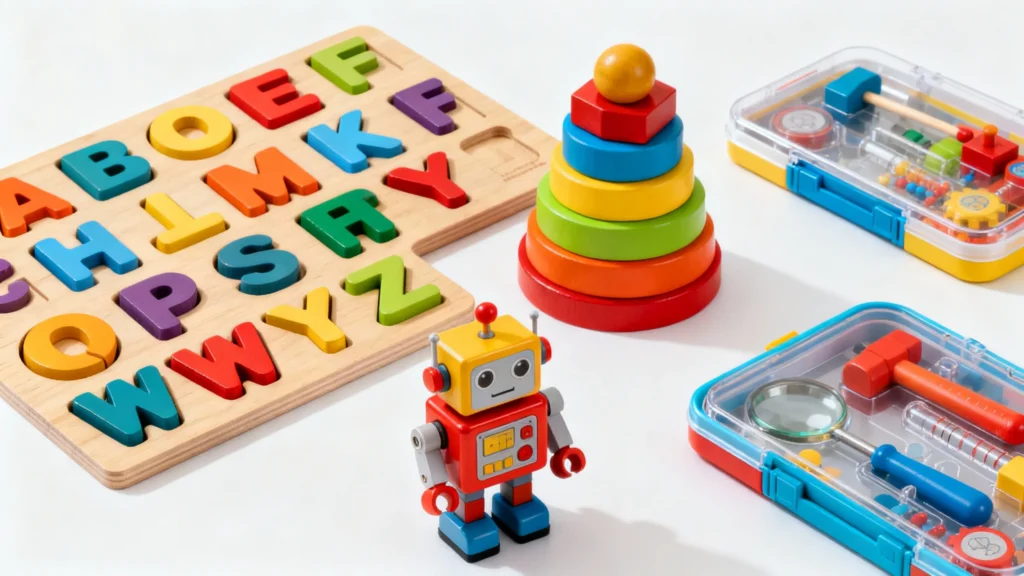
Creative Play That Builds Skills
Kindergarteners are natural creators, and their imaginations are in overdrive. Gifts that encourage open-ended play and hands-on creativity help them build essential skills while having a blast. At this age, children are developing fine motor skills, learning to express themselves, and gaining confidence in their abilities. The best creative gifts let them experiment, make mistakes, and proudly show off their masterpieces.
Art supplies are always a hit, but not all are created equal. We love options that are easy to use, low-mess, and versatile. For example, air-drying modeling clay like Crayola Model Magic lets kids sculpt fantastical creatures or tiny worlds, then display their creations once they harden. This type of clay is soft, lightweight, and doesn’t crumble, making it perfect for little hands and easy cleanup [2]. As children grow, these materials can even be used for more complex school projects, so the fun (and learning) lasts.
Organizing art supplies can be half the battle, especially when creative inspiration strikes. A cheerful, kid-friendly organizer helps keep markers, crayons, and colored pencils within easy reach. Open-top designs are especially helpful for young kids, allowing them to grab what they need independently and (in theory) put things away when finished [2]. This small step toward self-sufficiency is a big confidence booster.
Craft kits designed for kindergarteners strike a balance between guidance and freedom. Look for kits that offer pre-cut pieces or simple instructions, so kids can focus on coloring, assembling, or decorating rather than struggling with tricky steps. Shrink-art kits, for example, let children color pre-cut shapes, then watch the magic as their artwork shrinks in the oven to become charms or keychains. The process is quick, satisfying, and results in a tangible keepsake they can gift or treasure [2].
Don’t overlook building toys that encourage creativity and spatial reasoning. Sets with large, easy-to-handle pieces—think magnetic tiles or chunky interlocking blocks—invite kids to construct towers, bridges, and imaginary landscapes. These toys support problem-solving and perseverance, especially when a structure topples and needs rebuilding. Plus, they’re perfect for solo play or collaborating with siblings and friends.
Finally, consider spill-proof paint sets or washable markers for budding artists who love to experiment with color. These tools let kids explore painting and drawing with less worry about stains or messes, making it easier for parents to say yes to creative time [4]. The key is to provide materials that invite exploration and celebrate the process, not just the finished product.
Here’s what we love:
Inspiring Art & Craft Kits
Hands-On STEM and Learning Toys
Kindergarteners are naturally curious about how things work. STEM toys—those that encourage exploration in science, technology, engineering, and math—are a fantastic way to nurture this curiosity. The best options for this age group are hands-on, interactive, and designed to grow with your child’s abilities.
Building sets are a perennial favorite for a reason. Sets like LEGO, magnetic tiles, or marble runs invite kids to experiment with construction, balance, and cause-and-effect. For example, marble run kits with suction cups let children build tracks on walls or windows, then watch marbles race through their creations. This not only teaches basic physics concepts but also encourages trial and error—a core part of scientific thinking [5]. Expansion packs can add new challenges as skills develop.
Simple coding robots are another engaging way to introduce technology. Many are designed specifically for young children, using color-coded cards or buttons instead of screens. These robots teach sequencing, logic, and problem-solving in a playful, age-appropriate way [2]. Watching a robot follow their programmed commands gives kids a sense of accomplishment and sparks interest in how machines work.
For children who love to tinker, electronics kits with snap-together components are a wonderful introduction to circuits and basic engineering. While some kits are geared toward older kids, there are beginner sets with large, safe pieces and clear instructions suitable for kindergarteners. These kits let kids build simple projects—like lights, buzzers, or spinning fans—while learning about electricity in a hands-on way [1].
Nature exploration kits are perfect for kids who are fascinated by the world around them. Bug viewers, magnifying glasses, and simple gardening sets encourage observation, patience, and a love of science. Growing plants from seeds or watching insects up close helps children connect with nature and understand basic biology. These experiences can spark lifelong curiosity and respect for the environment [2].
Don’t forget about puzzles and logic games that challenge young minds. Look for options with large, sturdy pieces and engaging themes—animals, space, or vehicles are always popular. Holographic puzzles, for example, add a layer of visual interest and challenge, keeping kids engaged as they work to solve them [2]. These activities build spatial reasoning, perseverance, and attention to detail.
Finally, interactive pets or screen-free tech toys can offer a gentle introduction to caring for something “alive” and responding to feedback. These toys often react to touch, movement, or voice, encouraging empathy and responsibility while providing plenty of fun [5].
Worth checking out:
Clever STEM Starter Sets
Games and Activities for Social Growth
Kindergarten is a time when children are learning to navigate friendships, share, and cooperate. Games and group activities are a wonderful way to support these developing social skills while keeping things light and fun. The best games for this age group are easy to learn, quick to play, and encourage teamwork or gentle competition.
Cooperative board games are especially valuable for young children. Instead of pitting players against each other, these games require everyone to work together toward a common goal. This approach helps kids practice communication, turn-taking, and problem-solving, all while experiencing the joy of shared success. Many cooperative games are themed around adventures, animals, or simple mysteries, making them instantly appealing [2].
Classic card and board games with simple rules are also great choices. Look for games that reinforce counting, matching, or memory skills in a playful way. Games that can be played in under 20 minutes are ideal for short attention spans and make it easy to fit in a quick round before dinner or bedtime.
Outdoor activity kits—like obstacle courses or scavenger hunt sets—encourage movement and teamwork. These gifts help kids burn off energy, develop gross motor skills, and learn to cheer each other on. Many kits are designed for flexible play, so children can invent their own challenges or adapt the activities for solo or group fun [2].
Role-play sets—such as costumes, play kitchens, or doctor kits—invite children to step into different roles and scenarios. This kind of imaginative play is more than just fun; it helps kids understand emotions, practice empathy, and work through real-life situations in a safe, playful environment [4]. When children play together, they learn to negotiate, share ideas, and resolve conflicts.
Don’t underestimate the power of books to foster social and emotional growth. Stories featuring relatable characters and situations help children make sense of their own feelings and experiences. Series like Mo Willems’s Elephant and Piggie are beloved for their humor and warmth, making them a wonderful addition to any kindergartener’s library [2].
Finally, music toys—from simple keyboards to rhythm instruments—invite kids to collaborate, take turns, and express themselves. Making music together is a joyful way to connect and build confidence, whether it’s a family sing-along or a jam session with friends [4].
Parents are loving these:
Best Social Play Games
Experience Gifts and Subscriptions for Ongoing Discovery
Sometimes the best gifts aren’t things, but experiences that create lasting memories and spark new interests. Experience gifts and subscription boxes are a fantastic way to keep the learning going all year long, offering fresh activities and surprises each month.
Craft and science subscription boxes deliver hands-on projects right to your door. These kits are curated for different age groups and interests, from art and engineering to nature and cooking. Each box typically includes all the materials and instructions needed, so kids can dive right in. Parents appreciate the convenience, and children love the anticipation of a new box arriving [1]. Many families find that these subscriptions encourage kids to try new things and develop persistence as they tackle each project.
Virtual classes and workshops open up a world of possibilities, especially for families who want to explore new hobbies or connect with experts from afar. There are online classes for everything from music and dance to coding, cooking, and even stand-up comedy for kids [3]. These experiences can be tailored to your child’s interests and schedule, making them a flexible and meaningful gift. Some platforms even offer live, interactive sessions, so kids can ask questions and share their creations with peers.
Museum memberships or passes to local science centers, zoos, or botanical gardens are another thoughtful option. These gifts encourage families to explore together, discover new exhibits, and engage in hands-on learning outside the classroom. Many institutions offer special programs or workshops for young children, making each visit a new adventure [1].
For children who love to read, book subscription services can help build a personal library and foster a lifelong love of reading. These services often curate selections based on age and interests, introducing kids to new authors and genres. Receiving a new book each month keeps the excitement alive and encourages regular reading habits [2].
Finally, consider virtual experience gifts that connect kids with friends or family members who live far away. Online games, collaborative art projects, or shared cooking classes can help maintain bonds and create shared memories, even from a distance [3]. These experiences are especially meaningful for children who thrive on connection and shared activities.
Ready to shop?
Favorite Subscription Boxes
Choosing gifts for kindergarteners is about more than just finding something fun—it’s about nurturing curiosity, creativity, and a love of learning. Whether you opt for hands-on art supplies, clever STEM kits, engaging games, or experiences that keep the discoveries coming, the right gift can help your child grow in confidence and joy. Here’s to a year of playful learning and big adventures!
Sources
[1] Best Gifts for Kids: Holiday Gift Ideas for Kids | Wirecutter — https://www.nytimes.com/wirecutter/gifts/kids/
[2] 44 Best Gifts for 5-Year-Olds for 2025 | Reviews by Wirecutter — https://www.nytimes.com/wirecutter/gifts/best-gifts-for-5-year-olds/
[3] Tons of our favorite virtual experience gift ideas for kids and adults — https://coolmompicks.com/blog/2020/12/16/virtual-experience-gift-ideas-kids-adults/
[4] We’re Calling It: The Ultimate List of the Best Gift Ideas for Kids of … — https://www.goodhousekeeping.com/childrens-products/a61827377/best-gifts-for-kids/
[5] Best Toys for Kids in 2025 – CNET — https://www.cnet.com/gifts/best-toys-for-kids/