
Open-Ended Science Toys That Encourage Exploration
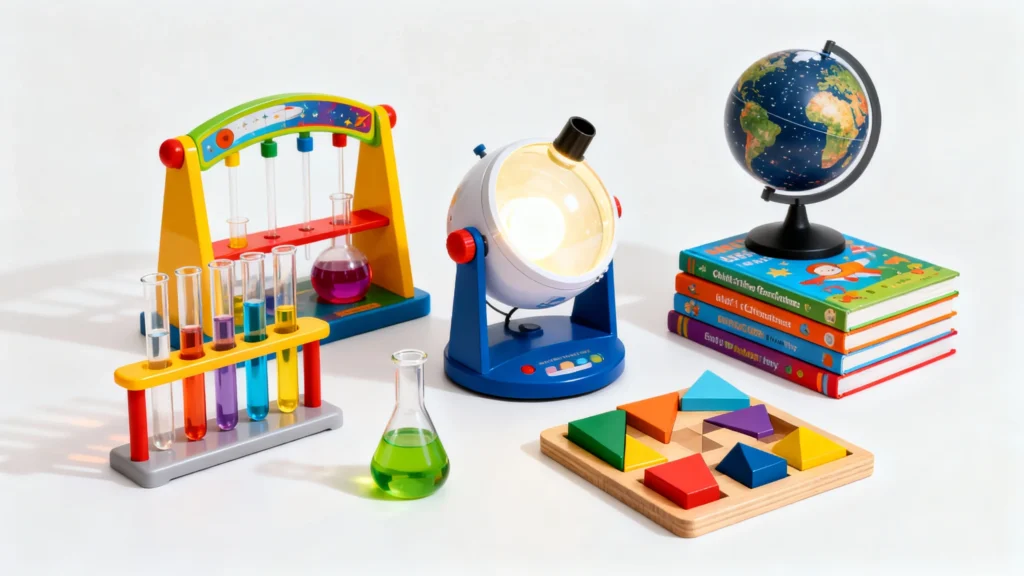
When it comes to nurturing a child’s scientific curiosity, open-ended toys are a powerful ally. These are not just labeled “educational” for the sake of it—they’re designed to invite experimentation, encourage questions, and let kids follow their own ideas. Research shows that children naturally gravitate toward toys that help them learn, playing in ways that mirror how scientists experiment and discover new things [1]. The best science toys are flexible, adaptive, and provoke creative thinking, rather than dictating a single way to play.
Building sets are a perennial favorite for a reason. Classic construction toys like LEGO, magnetic tiles, and marble runs allow kids to design, test, and rebuild, all while developing spatial reasoning and problem-solving skills. These toys grow with your child, offering new challenges as their abilities expand. For younger children, large blocks and simple connectors are ideal for exploring balance and structure, while older kids can tackle more complex engineering feats.
Robotics kits are another standout. Many modern sets introduce basic coding concepts through hands-on play, letting kids program robots to move, draw, or even react to their environment. These toys blend engineering, technology, and creativity, making them a hit with kids who love to tinker. The real magic is in the open-ended possibilities—children can invent their own games, build new attachments, or even collaborate with siblings and friends on group projects.
Don’t overlook the power of simple science tools. A sturdy magnifying glass, a beginner’s microscope, or a set of child-friendly lab equipment can transform a walk in the backyard into a scientific expedition. These tools encourage kids to observe, ask questions, and make discoveries about the world around them. The key is to choose items that are durable, easy to use, and safe for little hands.
What sets these toys apart is their ability to foster lifelong skills—critical thinking, logic, collaboration, and resilience in the face of trial and error [1]. They’re not about memorizing facts, but about learning how to learn, which is the heart of scientific inquiry.
Here’s what we love:
Best Science Exploration Toys
Creative Kits and Projects for Hands-On Learning
For many children, the thrill of science comes alive when they can make something with their own hands. Creative kits and project sets are a wonderful way to channel that energy into meaningful learning. These gifts offer guided activities that introduce scientific concepts, but always leave room for experimentation and personalization.
Chemistry sets remain a classic for a reason. Modern versions are designed with safety in mind and often include colorful, engaging experiments that teach about reactions, mixtures, and the properties of matter. Look for kits that encourage kids to ask “what if?” and try variations on each experiment. The best sets provide plenty of materials and clear instructions, but also invite kids to document their results and draw their own conclusions.
Biology and nature kits are another fantastic option. Butterfly gardens, ant farms, and crystal-growing sets let children observe real-life processes over time. These projects teach patience and observation, as well as the basics of life cycles, ecosystems, and geology. For kids who love animals or the outdoors, these gifts can spark a lifelong interest in the natural world.
Engineering and invention kits are perfect for budding makers. From simple machines to more advanced robotics, these sets encourage kids to build, test, and iterate. Many include motors, sensors, or programmable elements, blending mechanical engineering with basic coding. The process of troubleshooting and refining a design is where the deepest learning happens.
Art-meets-science kits are also worth considering. Soap-making, slime labs, and DIY bath bomb kits combine chemistry with creativity, letting kids explore textures, colors, and reactions in a hands-on way. These projects are especially appealing for children who enjoy crafting, and they offer a gentle introduction to scientific thinking through play [5].
What we love about these kits is their ability to turn abstract concepts into tangible experiences. By making, testing, and observing, kids gain a deeper understanding of how the world works—and they get the satisfaction of creating something uniquely their own.
Parents are loving these:
Top Hands-On Science Kits
Inspiring Books and Games for Young Scientists
Books and games can be just as powerful as physical toys when it comes to sparking a love of science. The right story or challenge can introduce new ideas, encourage curiosity, and make learning feel like an adventure.
Children’s books about science come in many forms, from beautifully illustrated picture books to engaging graphic novels. Stories that feature real scientists, fascinating discoveries, or imaginative explorations of the natural world can inspire kids to ask questions and dream big. Some of our favorites blend humor and information, making complex topics accessible and fun. For older children, graphic novels that weave STEM themes into their plots—like tales of young inventors or eco-heroes—can be especially motivating [5].
Board games and card games with a science twist are another excellent gift idea. Many modern games are designed to teach concepts like logic, deduction, and strategy while keeping the focus on fun. Games that involve building, coding, or solving puzzles help develop critical thinking and collaboration skills. Cooperative games, where players work together to solve a problem or complete a mission, are particularly effective for younger children and families.
Puzzle books and activity sets also have a place in the science learning toolkit. These gifts encourage kids to tackle challenges, experiment with solutions, and enjoy the process of discovery. Look for books that include experiments, riddles, or hands-on activities—these can be a great way to keep curious minds engaged during the holiday break.
What unites these gifts is their ability to make science approachable and exciting. Whether through a captivating story or a clever game mechanic, they help children see themselves as explorers and problem-solvers.
Worth checking out:
Favorite Science Books & Games
Digital Tools and Apps That Make Science Fun
In today’s world, digital tools can be a powerful supplement to hands-on learning. The best science apps and games are designed not to replace real-world exploration, but to enhance it—offering interactive experiences that encourage kids to experiment, solve problems, and think critically.
Math and coding apps are a standout in this category. Apps like Bedtime Math turn math into a daily family ritual, using stories and word problems to make numbers feel relevant and fun. Research shows that these kinds of apps can actually improve children’s math performance and help parents feel more comfortable engaging with math at home [2]. Visual math apps, such as those in the DragonBox series, use playful characters and interactive puzzles to help kids develop a strong sense of numbers and operations.
Coding apps for kids are designed to be accessible, even for families with no programming background. Many use puzzles and games to introduce the basics of logic, sequencing, and problem-solving. These apps encourage kids to think like programmers, breaking down big challenges into smaller steps and testing their solutions. Coding together can also be a wonderful family activity, fostering collaboration and creativity [2].
Science exploration apps can take kids on virtual field trips, let them simulate experiments, or introduce them to fascinating facts about the universe. The best apps are those that invite kids to ask questions, make predictions, and test their ideas—mirroring the process of scientific inquiry.
It’s important to choose age-appropriate, well-reviewed apps that prioritize engagement and learning over passive screen time. Look for apps recommended by educators and tested with real families, as these are most likely to offer meaningful, enjoyable experiences [2].
What excites us about digital tools is their ability to make complex ideas accessible and interactive. When used thoughtfully, they can open up new worlds of discovery and complement the hands-on learning that happens every day.
Ready to shop?
Best Science Learning Apps
The holidays are a wonderful opportunity to nurture a child’s curiosity and passion for discovery. Science-focused gifts—whether hands-on kits, inspiring books, or thoughtfully chosen digital tools—can help children see learning as an adventure. We hope these ideas spark joyful exploration and many moments of wonder in your family this season.
Sources
[1] Learning Toys and STEM Toys We Love | Reviews by Wirecutter — https://www.nytimes.com/wirecutter/reviews/learning-toys-and-stem-toys-we-love/
[2] Some of the Best Online Learning Games for Kids | Reviews by Wirecutter — https://www.nytimes.com/wirecutter/reviews/our-favorite-learning-apps-for-tablets-and-smartphones/
[3] The Only Toy Gift Guide for a 3-Year-Old You’ll Ever Need — https://nymag.com/strategist/article/best-gifts-toys-for-a-3-year-old.html
[4] 25 Best Children’s Books Gift Ideas | The Strategist — https://nymag.com/strategist/article/best-childrens-books-gift-ideas.html
[5] 30 Best Toys and Gifts for 7-Year-Olds in 2025 — https://www.goodhousekeeping.com/childrens-products/toy-reviews/g44094341/best-toys-gifts-for-7-year-old/