Safe Chemistry Sets for Kids: Editorially Scored by Age and Real Chemistry Content
Chemistry sets for kids editorially scored — age-appropriate, safe, with notes on which kits cover real chemistry vs. which are just colourful slime. Plus US/EU safety standards.
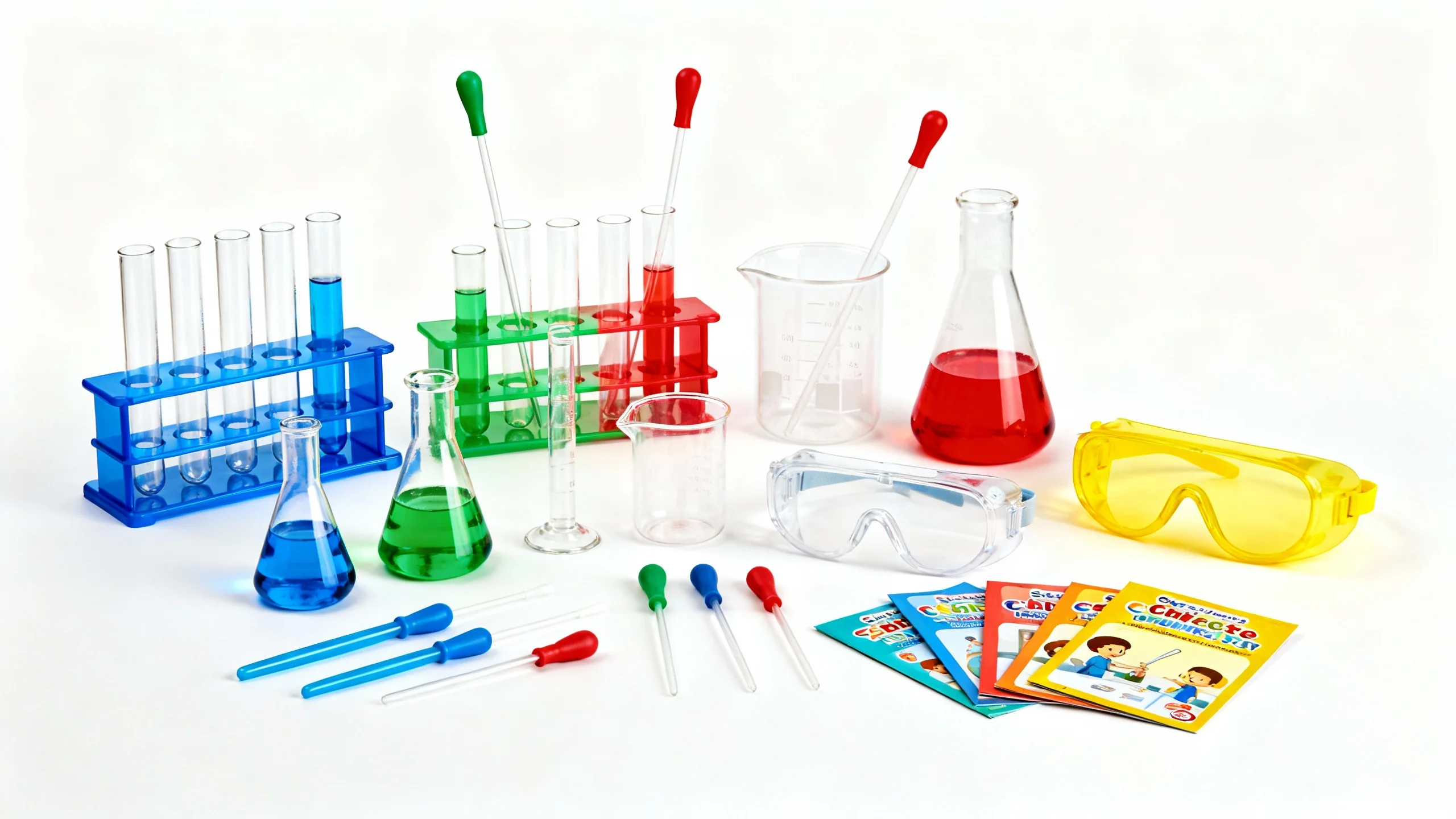
The kids-chemistry-set market is split sharply: there are kits that teach genuine chemistry concepts (acid-base, oxidation, polymer-chemistry, crystal-formation) with safety-vetted reagents, and there are kits that are essentially craft-with-coloured-water marketed as “chemistry”. This guide separates them, age by age, and notes which sets meet US (ASTM F963) and EU (EN 71) safety standards.
Thames & Kosmos C500 Chemistry Set
The C500 is the entry to the Thames & Kosmos serious-chemistry line — 28 experiments covering real chemistry concepts (acid-base, oxidation, surface tension, precipitation), proper lab equipment (test tubes, pipettes, alcohol burner), and safety-vetted reagents. CE / EN 71 certified. The progression goes C500 → C1000 → C3000 as the child develops; this is the canonical entry point.
| Chemistry Sets for Kids — at a glance | Notes | Age | Score |
|---|---|---|---|
| Thames & Kosmos C500 Editor's PickThames & Kosmos | 28 experiments, real reagents | 10+ | 93 |
| Thames & Kosmos Crystal GrowingThames & Kosmos | Single-topic, real chemistry | 8+ | 88 |
| National Geographic Mega Slime LabNational Geographic | Polymer chemistry framing | 8+ | 85 |
| Magic School Bus Chemistry Set Best valueEducational Insights | Branded, single-topic kits | 6+ | 83 |
| AmScope Periodic Table Slide SetAmScope | Element samples in resin | 12+ | 90 |
Frequently asked questions
What age can a child first use a chemistry set?
Are chemistry sets safe?
What's the most educational chemistry kit for a 10-year-old?
Are slime kits real chemistry?
What's the difference between a US and EU chemistry set?
Our previous picks (preserved with affiliate links)
The list below is the original article we published earlier. The editorial bundle above represents our current analysis as of the last-reviewed date.
Chemistry Sets for Young Explorers: Ages 3-6
For children ages 3 to 6, the best chemistry sets are those that nurture curiosity while keeping safety at the forefront. At this stage, kids are natural experimenters, eager to mix, pour, and observe—but they need materials and activities designed for their developmental level. The ideal kits for this age group use non-toxic ingredients, oversized tools for small hands, and simple, visually engaging experiments that focus on cause and effect rather than complex chemical reactions.
Many early science kits for preschoolers and kindergartners focus on color mixing, fizzing reactions using baking soda and vinegar, or safe sensory play with water and bubbles. These activities introduce basic scientific thinking—like making predictions and observing changes—without any risk from hazardous substances. According to research on learning toys, open-ended kits that encourage experimentation and creativity are especially effective for young children, helping them develop problem-solving skills and a love of discovery [1].
Ingredient transparency is crucial at this age. Parents should look for kits that clearly list all included substances and avoid anything with small parts that could pose a choking hazard. Some kits even use edible materials or items commonly found in the kitchen, making them both safe and reassuring for caregivers. The best options also provide large, sturdy tools—like droppers, beakers, and test tubes—that are easy for little hands to manipulate, supporting the development of fine motor skills [5].
We’ve found that the most successful kits for this age group are those that balance mess-free fun with hands-on engagement. Kits that include easy-to-clean trays or mats, and that keep experiments short and visually dramatic, tend to hold young children’s attention and make science feel magical. Many parents also appreciate kits that can be reused or that inspire kids to try similar activities with household items, extending the learning beyond the box [3].
Here’s what we love:
Gentle Science Starters
Building Confidence: Chemistry Sets for Ages 7-10
As children move into the 7-10 age range, their ability to follow instructions and understand basic scientific concepts grows rapidly. Chemistry sets for this group can introduce more complex reactions, a wider variety of experiments, and the first real taste of laboratory tools—while still keeping safety as the top priority. At this stage, kids are ready for kits that challenge them to think critically, make predictions, and draw conclusions from their results [1].
The best chemistry sets for this age bracket include clear, step-by-step instructions with illustrations, making it easy for kids to work independently or with minimal adult guidance. Kits that offer a range of experiments—such as color-changing reactions, simple crystal growing, or safe “explosions” using baking soda and citric acid—help keep interest high and encourage repeated use. Many sets also include protective gear like goggles and gloves, which not only keep kids safe but also help them feel like real scientists [2].
Ingredient safety remains essential. Look for kits that use food-grade chemicals or substances with well-documented safety profiles. Reputable brands will provide ingredient lists and safety data, and many will highlight certifications such as ASTM or CE compliance. Kits that avoid glassware in favor of durable plastic, and that include spill trays or mats, are especially practical for home use [3].
Reusable lab tools—like test tubes, pipettes, and measuring spoons—add value by allowing kids to repeat experiments or invent their own. This kind of open-ended play is linked to stronger critical thinking skills and a deeper understanding of scientific processes [1]. Parents often find that kits with a mix of guided experiments and opportunities for free exploration are the ones their kids return to again and again.
Finally, kits that tie experiments to real-world phenomena—like making slime to learn about polymers, or testing acids and bases with kitchen ingredients—help children see the relevance of chemistry in everyday life. This connection can spark ongoing interest and confidence in STEM subjects [5].
Parents are loving these:
Confidence-Boosting Kits
Inspiring Future Scientists: Chemistry Sets for Ages 11+
For tweens and teens, chemistry sets can become a true gateway to advanced scientific exploration. At this stage, kids are capable of handling more sophisticated equipment and following detailed safety protocols, making it possible to introduce real chemical reactions and more challenging experiments. The best kits for ages 11 and up offer a balance of hands-on learning and responsible risk, supporting both independent investigation and structured discovery [2].
Advanced chemistry sets often include microscopes, pH strips, and a wider array of chemicals—though still within the bounds of what’s safe for home use. These kits may allow for experiments like growing large crystals, testing for starches and proteins, or exploring electrochemistry with simple batteries. Importantly, they come with comprehensive safety instructions, including guidance on proper handling, storage, and disposal of materials [3].
At this level, ingredient transparency and certification are non-negotiable. Look for kits that meet recognized safety standards and that provide detailed information about each chemical included. Some sets even include links to online safety resources or video tutorials, helping kids and parents understand the importance of lab safety and responsible experimentation [2].
We’ve found that the most engaging kits for older kids are those that encourage independent research and experimentation. Kits that provide background information on the science behind each experiment, or that challenge users to design their own investigations, help foster a sense of ownership and excitement about learning. Many parents appreciate kits that can be used as a supplement to school science classes, or that inspire kids to pursue further study in chemistry and related fields [1].
For teens interested in more specialized topics—like forensics, environmental science, or even basic coding integrated with chemistry—there are kits that blend disciplines and support deeper inquiry. These options can be especially motivating for kids who are already passionate about science, or who are looking for a challenge beyond the basics [5].
Worth checking out:
Advanced Science Labs
What to Look for in a Safe Chemistry Set
No matter your child’s age, choosing a safe chemistry set means looking beyond flashy packaging to the details that matter most. Safety certifications—such as ASTM, CE, or EN71—are a strong indicator that a kit has been tested for both chemical and physical safety. Ingredient transparency is equally important; reputable kits will list all included substances and provide guidance on safe handling and disposal [2][3].
For younger children, prioritize kits that use natural or food-grade ingredients, and avoid anything with small parts or strong fragrances, which can sometimes contain allergens or other concerning chemicals [4]. As kids get older, look for kits that include protective gear and that teach proper lab protocols, such as wearing goggles, tying back long hair, and washing hands after experiments.
Clear, well-illustrated instructions are essential for both safety and learning. The best kits break down each experiment into manageable steps, highlight potential hazards, and offer troubleshooting tips. Many also include parent guides or online resources, making it easier for adults to supervise and support their child’s learning [1].
Matching a kit to your child’s interests and developmental stage is key. For some kids, a kit focused on colorful reactions or slime-making will be the perfect entry point. For others, a set that explores environmental science, forensics, or even the chemistry of cooking may be more engaging. The most rewarding kits are those that invite kids to ask questions, make predictions, and experiment freely—building both confidence and a lifelong love of science [1][5].
Finally, consider the reusability and expandability of a kit. Sets that include durable lab tools or that suggest ways to continue experimenting with household items can provide ongoing value and encourage kids to keep exploring long after the initial experiments are done.
Ready to shop?
Safety-First Chemistry Picks
Choosing the right chemistry set is about more than just sparking excitement—it’s about nurturing safe, confident, and curious young scientists. With thoughtful selection and a little guidance, you can help your child discover the wonders of chemistry in a way that’s both engaging and secure. Here’s to many joyful, fizzing, color-changing experiments ahead!
Sources
[1] Learning Toys and STEM Toys We Love | Reviews by Wirecutter — https://www.nytimes.com/wirecutter/reviews/learning-toys-and-stem-toys-we-love/
[2] 15 Best Chemistry Kits For Your Children In 2025 — https://www.momjunction.com/articles/best-chemistry-sets-for-kids_00774526/
[3] Best science kits for kids of all ages | MadeForMums — https://www.madeformums.com/reviews/best-science-toy/
[4] Baby Shampoos Without Harmful Chemicals – Consumer Reports — https://www.consumerreports.org/babies-kids/bathing-and-personal-care/baby-shampoos-without-harmful-chemicals-a1071314346/
[5] 23 Best STEM Toys of 2025, Tested With Kids and Parents — https://www.goodhousekeeping.com/childrens-products/g5162/best-stem-toys/