
Sensory Toys That Build Foundational Skills
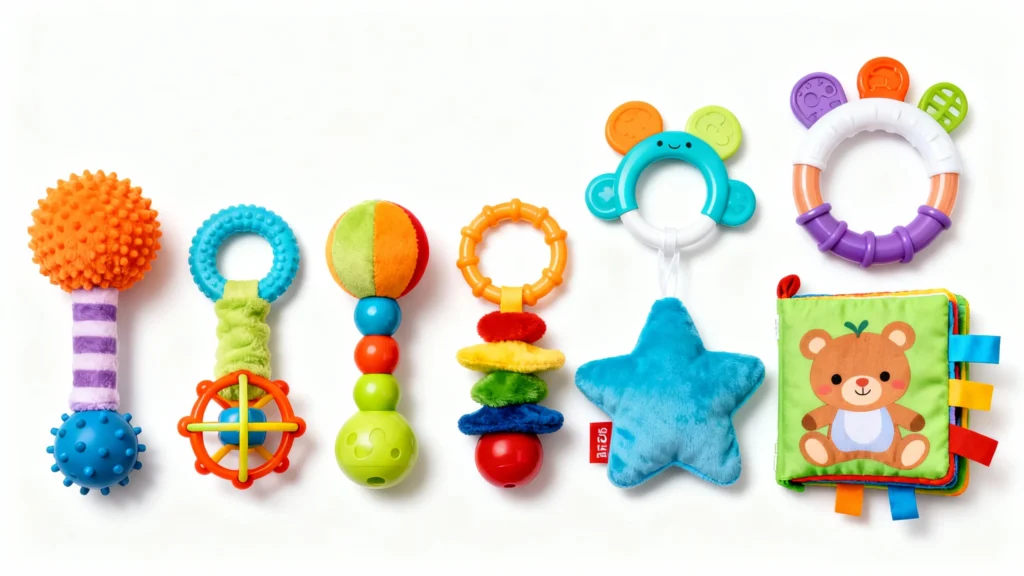
When we think about the earliest stages of learning, it’s easy to picture books and blocks. But for babies, sensory toys are the real building blocks of development. These toys are designed to engage a child’s senses—touch, sight, sound, and sometimes even taste and smell—laying the groundwork for everything from fine motor skills to language acquisition. The best sensory toys don’t just entertain; they actively teach by inviting babies to grasp, reach, shake, and explore.
Tactile toys, for example, are essential for developing hand-eye coordination and dexterity. Consider a soft ball covered in different textures or a plush animal with crinkly, squeaky, and smooth patches. As babies squeeze, pat, and mouth these toys, they’re not just having fun—they’re learning how their hands and fingers work, and how to control their movements. The Edushape Sensory Ball, for instance, is a favorite because its nubby texture makes it easier for little hands to grip, encouraging repeated reaching and grasping, which strengthens both muscles and neural pathways [3].
Visual and auditory sensory toys add another layer of learning. Toys that light up, flash, or change colors stimulate the visual system and help babies track movement, which is a precursor to reading and writing later on [3]. Auditory toys—think rattles, chimes, or musical instruments—teach cause and effect: shake the rattle, and it makes a sound. This simple lesson is a cornerstone of early cognitive development. The GUND Baby My Little Artist Set is a great example, with each “tool” making a different sound, encouraging babies to experiment and discover what happens when they interact with each piece [3].
Textures, sounds, and colors aren’t just for fun—they’re critical for brain development. Research shows that sensory play helps babies make sense of the world, building connections in the brain that support future learning [4]. When a baby explores a toy with a variety of textures, they’re not only developing their sense of touch, but also learning to compare, contrast, and categorize—skills that are foundational for math and science later on.
Language development also gets a boost from sensory toys. As parents and caregivers talk about what the baby is experiencing—“That’s a bumpy ball!” or “Listen, it rattles!”—babies begin to associate words with sensations, laying the groundwork for early vocabulary [4]. Even simple games like peekaboo with a textured blanket or naming the colors on a stacking toy can spark important language connections.
Here’s what we love:
Foundational Sensory Favorites
Open-Ended Sensory Play for Creativity and Problem-Solving
As babies grow into toddlers, their play becomes more complex—and so does their need for toys that encourage imagination and flexible thinking. Open-ended sensory toys are the unsung heroes here. These are the toys that don’t dictate how to play, but instead invite children to experiment, build, and invent their own games. Think stacking stones, nesting cups, or a set of colorful foam shapes that can be anything from stepping stones to drums.
Open-ended toys are powerful because they foster creativity and problem-solving. The Stapelstein Rainbow Set, for example, is a collection of foam shapes that can be stacked, balanced, floated, or used as props in imaginative play [3]. There’s no single “right” way to use them, which means children are free to invent their own challenges and solutions. This kind of play encourages persistence and flexible thinking—skills that are essential for STEM learning and for navigating the ups and downs of life.
Sorting and building toys also teach important early math concepts. When a child sorts blocks by color or size, or stacks rings in order, they’re learning about patterns, sequences, and spatial relationships. These skills form the foundation for later math and science learning. The Fat Brain Toys Dimpl Digits, with its numbered bubbles that pop and flip to reveal numbers in two languages, is a clever way to introduce counting and number recognition while providing satisfying sensory feedback [3].
Open-ended sensory sets are especially valuable because they grow with your child. A set of nesting cups might start as a simple stacking toy for a baby, but as your child grows, those same cups become tools for pouring, scooping, and even pretend cooking. This adaptability means you get more mileage out of each toy, and your child gets to revisit familiar objects in new ways as their abilities expand.
Imaginative play is also a natural outcome of open-ended sensory toys. When children use a set of foam shapes to create a bridge for their cars or a stepping stone path across the living room, they’re not just having fun—they’re practicing planning, sequencing, and collaborative problem-solving if they’re playing with others. These are the kinds of skills that help children become creative thinkers and effective team players later in life.
Worth checking out:
Creative Play Essentials
Sensory Toys That Support Emotional and Social Growth
While sensory toys are often celebrated for their role in physical and cognitive development, their impact on emotional and social growth is just as profound. Babies and toddlers experience big feelings, and sensory play can be a powerful tool for helping them learn to manage those emotions. Certain sensory toys are designed specifically to support self-soothing, focus, and emotional regulation.
For example, fidget toys and textured balls can help children calm themselves when they’re overwhelmed. The simple act of squeezing, rolling, or popping a sensory toy provides a physical outlet for stress and can help children regain control when emotions run high [3]. This is especially important for children who are learning to navigate frustration, disappointment, or transitions—common challenges in the toddler and preschool years [5].
Sensory toys also create opportunities for social learning. Toys that encourage turn-taking, sharing, and cooperative play help children practice the skills they’ll need to build friendships and work in groups. For instance, a musical toy that requires two children to play together, or a set of building pipes for the bath that can be assembled as a team, teaches not just cause and effect, but also collaboration and communication [3].
These experiences are more than just practice for the playground—they’re essential for building resilience. When a child faces a challenge during play, like figuring out how to fit a shape into a sorter or waiting their turn with a favorite toy, they’re learning to cope with frustration and persist through setbacks. This process is a key part of emotional development, and sensory toys provide a safe, low-stakes environment for these lessons to unfold [5].
It’s also worth noting that sensory play can be especially helpful for children who are struggling with big emotions or behavioral challenges. The tactile feedback from a sensory toy can provide comfort and grounding, making it easier for children to calm down and re-engage with the world around them [5]. For parents and caregivers, having a few well-chosen sensory tools on hand can make transitions smoother and help prevent meltdowns before they start.
Parents are loving these:
Emotional Growth Helpers
Choosing sensory toys that actually teach something is about more than just picking the latest trend. It’s about finding tools that spark curiosity, encourage exploration, and support your child’s growth in every domain—physical, cognitive, emotional, and social. With thoughtfully chosen sensory toys, playtime becomes a true learning adventure, helping your child build skills that will last a lifetime.
Sources
[1] Best Baby and Toddler Sensory Toys, Tested and Reviewed — https://www.thebump.com/a/sensory-toys-for-babies-and-toddlers
[2] 9 Best Toys for 3-Month-Old Babies, Tested and Reviewed — https://www.thebump.com/a/best-toys-for-3-month-old
[3] 24 Best Sensory Toys for Babies and Kids of 2025 — https://www.goodhousekeeping.com/childrens-products/toy-reviews/g33322567/sensory-toys/
[4] Sensory Play Activities for Babies and Toddlers – Benefits of Sensory … — https://www.whattoexpect.com/first-year/play-and-activities/sensory-play-activities-babies-toddlers
[5] The Frustrated Four Year Old | Alpha Mom — https://alphamom.com/parenting/young-child/frustrated-four-year-old-child/