
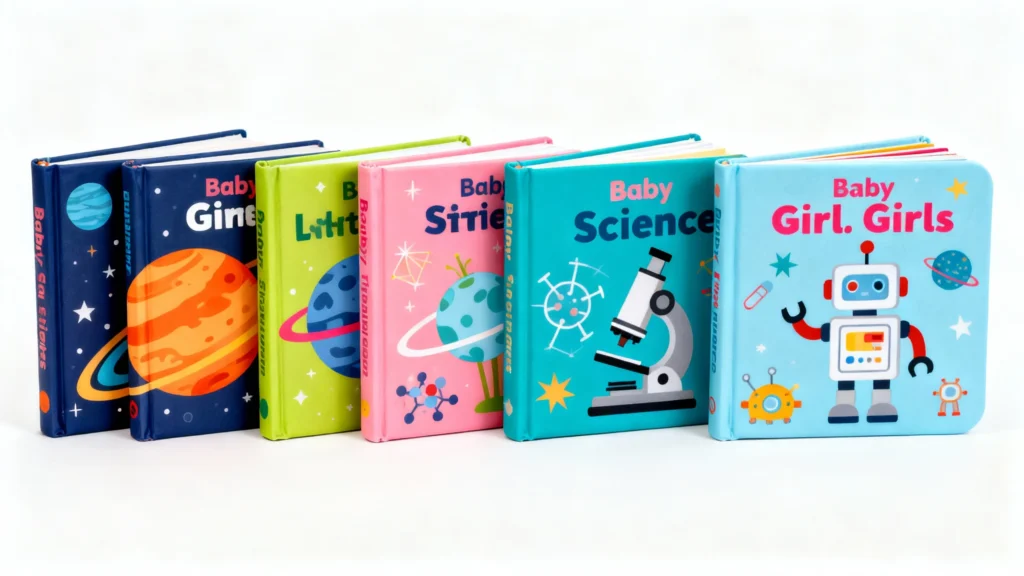
Celebrating Science Through Inspiring Stories
When we think about the earliest seeds of scientific curiosity, storytelling stands out as a powerful tool. Stories can introduce girls to the wonders of the natural world, the thrill of discovery, and the idea that science is for everyone. Books that weave scientific ideas into their narratives help children see exploration as part of everyday life. For girls, seeing themselves reflected in these stories—whether as curious protagonists or as future inventors—can be especially empowering.
Classic tales like “A Wrinkle in Time” by Madeleine L’Engle have inspired generations of girls to embrace their unique perspectives and love of science. Meg Murry, the book’s protagonist, is a relatable heroine who finds strength in her curiosity and intellect. Her mother, Kate, is a scientist who conducts experiments in the kitchen, showing that scientific thinking can happen anywhere, not just in a lab. These characters demonstrate that girls who love science are not only normal—they are extraordinary [5].
Books don’t have to be overtly about science to nurture a scientific mindset. Stories featuring girls who ask questions, solve problems, and approach the world with wonder help build the foundation for critical thinking and resilience. For example, Beverly Cleary’s “Ramona the Brave” may not be a science book, but Ramona’s independent spirit and creative problem-solving encourage girls to see things differently and speak up for themselves—qualities that are essential for any budding scientist [5].
We also love stories that celebrate diversity in families and experiences. Modern technology even allows parents to create personalized books that reflect their own family’s journey, including stories with two moms or unique cultural backgrounds. This kind of representation helps every child feel seen and valued, reinforcing the idea that science belongs to everyone [2].
Here’s what we love:
Inspiring Science Stories
Board Books and Picture Books That Spark Curiosity
For babies and toddlers, board books and picture books are the perfect introduction to scientific ideas. These books use simple language, vibrant illustrations, and interactive elements to make complex concepts accessible and fun. The best science-themed board books for girls encourage them to observe, ask questions, and experiment—laying the groundwork for a lifelong love of learning.
Titles like “Baby Loves Aerospace Engineering!” and “Quantum Physics for Babies” break down big ideas into bite-sized, age-appropriate concepts. These books show that even the youngest readers can start to understand the basics of physics, engineering, and biology. The playful approach makes science approachable and exciting, rather than intimidating.
We’re also fans of books that celebrate the everyday science all around us. Stories about the water cycle, plant growth, or animal habitats invite children to explore their environment and notice patterns. Books like “Ada Twist, Scientist” feature curious girls who investigate the world with enthusiasm, modeling the kind of inquisitive mindset we want to nurture in our daughters.
It’s important to choose books that reflect a range of experiences and backgrounds. Personalized books, created with the help of AI or other tools, can help families tell their own unique stories—whether that means including two moms, a donor, or a multicultural background. These books remind girls that their own stories are worth telling and that their curiosity is something to be celebrated [2].
Worth checking out:
Best Board Books for Little Scientists
Biographies and Real-Life Role Models for Young Girls
Introducing girls to real-life scientists—especially women—can be transformative. Biographies and picture books about trailblazing women in STEM show girls that they, too, can make discoveries and change the world. These stories provide concrete examples of perseverance, creativity, and the joy of scientific inquiry.
Marie Curie’s life story is a perennial favorite. Even condensed versions, like those found in classic children’s anthologies, have inspired young readers to believe in their own potential as scientists [5]. Books such as “Marie Curie (Little People, BIG DREAMS)” and “The Girl Who Thought in Pictures: The Story of Dr. Temple Grandin” introduce girls to women who overcame obstacles and followed their passions.
We also recommend books that highlight the achievements of women from diverse backgrounds and fields. Stories about astronauts, mathematicians, engineers, and inventors help girls see the many ways they can contribute to science. Reading about women who have made a difference in their communities and the world encourages girls to dream big and persist in the face of challenges.
It’s not just about famous names, either. Books that feature everyday role models—like veterinarians, doctors, or environmental scientists—help girls imagine themselves in a variety of scientific careers. The key is to provide a rich tapestry of examples so that every girl can find someone to relate to and be inspired by [5].
Parents are loving these:
Favorite Biographies for Future Scientists
Interactive and Sensory Books for Hands-On Learning
For many young children, hands-on exploration is the best way to learn. Interactive and sensory books engage multiple senses, making scientific concepts more memorable and meaningful. Books with flaps, textures, or built-in experiments invite girls to touch, manipulate, and observe—just like real scientists.
We’re big fans of books that encourage experimentation and play. For example, bath toys that teach the fundamentals of water science can turn an ordinary bath into a mini laboratory. Toys like the Pluï Rain Cloud or Boon Building Bath Pipes introduce concepts like cause and effect, hydroelectricity, and engineering in a playful, accessible way [1]. Pairing these toys with books about water, weather, or engineering can deepen understanding and spark new questions.
Interactive books that include simple experiments—like growing a plant or mixing colors—help girls see themselves as active participants in the scientific process. These experiences build confidence and reinforce the idea that science is something you do, not just something you read about. Books that encourage observation, prediction, and recording results lay the foundation for scientific thinking from the very beginning.
We also appreciate books that invite girls to use their senses to explore the world. Touch-and-feel books about animals, plants, or the human body help develop fine motor skills and vocabulary while fostering curiosity about how things work.
Ready to shop?
Top Interactive Science Books
Nurturing a love of science in girls starts with the stories we share and the questions we encourage them to ask. By choosing books that celebrate curiosity, showcase real-life role models, and invite hands-on exploration, we can help our daughters see themselves as the scientists, inventors, and explorers of tomorrow. Every page turned is a step toward a future where girls know their questions—and their dreams—matter.
Sources
[1] 5 super cool STEM bath toys to help create future scientists — https://coolmompicks.com/blog/2017/01/14/stem-science-based-bath-toys/
[2] I Used AI to Generate a Book for My Future Baby, and It (Eventually … — https://www.cnet.com/tech/services-and-software/i-used-ai-to-generate-a-book-for-my-future-baby-and-it-eventually-turned-out-so-cute/
[5] Books we love for future scientists — https://www.asbmb.org/asbmb-today/opinions/030624/books-we-love-for-future-scientists