
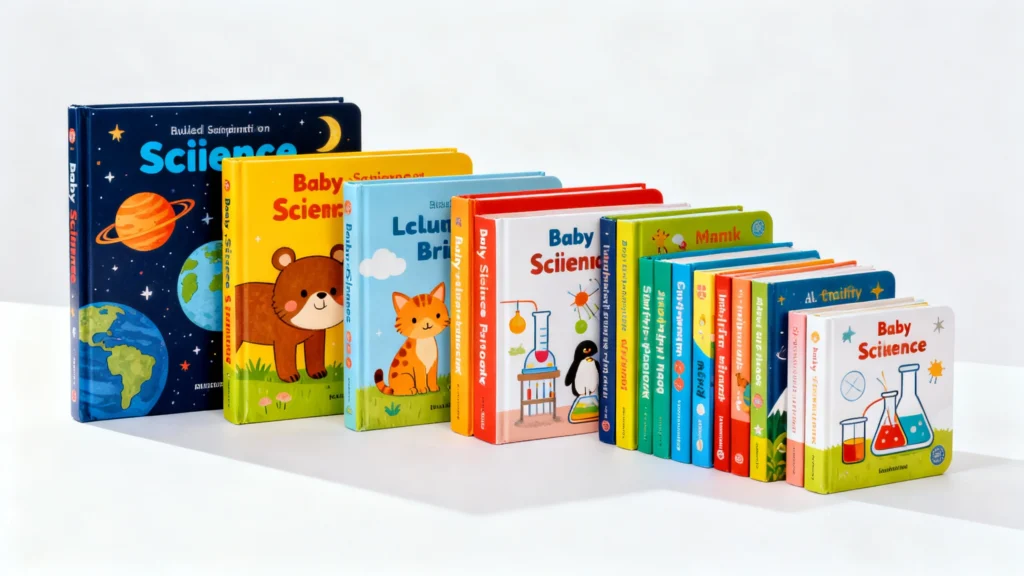
Celebrating Curiosity: Board Books That Inspire Wonder
When it comes to nurturing a lifelong love of science, the earliest years matter more than we sometimes realize. Babies are natural-born scientists—constantly observing, experimenting, and making sense of their world. The right board books can help channel that innate curiosity, introducing big ideas in ways that are playful, accessible, and visually engaging. We look for books that encourage question-asking, celebrate discovery, and invite families to marvel together at the mysteries all around us.
One of our perennial favorites is “Baby Loves Quarks!” by Ruth Spiro. This board book series distills complex scientific concepts—like particle physics—into simple, joyful language and bright illustrations. While your baby may not grasp the intricacies of quarks and atoms, the book’s gentle explanations and cheerful art plant seeds of curiosity. We love how these books respect a child’s intelligence, never talking down or shying away from real science.
Another standout is “Hello, World! Solar System” by Jill McDonald. This series is designed for the youngest listeners, with sturdy pages and vibrant images that introduce planets, stars, and space exploration. The text is rhythmic and interactive, encouraging little ones to point, name, and wonder. We’ve found that these books are perfect for lap time, sparking early conversations about the universe and our place within it.
For families who appreciate a poetic touch, “Dream Big, Little Scientists” by Michelle Schaub is a gentle bedtime read that celebrates the many branches of science. Each page features a different field—from astronomy to zoology—paired with soothing rhymes and cozy illustrations. It’s a lovely way to introduce the breadth of scientific discovery, even as you wind down for the night.
We’re also drawn to books that blend science with art, like “The Stuff of Stars” by Marion Dane Bauer and illustrated by Ekua Holmes. This Coretta Scott King Award winner begins with the Big Bang and traces the origins of life, using stunning paper collage to evoke the wonder of creation. The book’s poetic language and dazzling visuals make it a favorite for both children and adults, offering a sense of awe that lingers long after the last page [1].
The best science-themed board books don’t just teach facts—they invite families to share in the joy of asking questions and making discoveries together. Whether you’re reading about atoms, animals, or the stars above, these stories help build a foundation for critical thinking and a lifelong sense of wonder.
Here’s what we love:
Wonder-Filled Board Books
Exploring the Natural World: Science Stories for Little Learners
As babies grow into curious toddlers, their questions become more pointed and their observations more detailed. This is a perfect time to introduce books that explore the natural world—from the tiniest insects to the vastness of the sky. We gravitate toward stories that encourage hands-on exploration, foster empathy for living things, and help children see themselves as part of a larger ecosystem.
“Over and Under the Pond” by Kate Messner is a beautiful example of a book that blends storytelling with science. Following a mother and child as they paddle across a pond, the story reveals the hidden worlds above and below the water’s surface. The illustrations are lush and detailed, inviting children to spot animals and imagine what’s happening beneath the ripples. We love how this book encourages observation skills and a sense of interconnectedness with nature.
For budding botanists, “Plant the Tiny Seed” by Christie Matheson is an interactive delight. Each page invites children to tap, clap, or wiggle their fingers to help seeds grow, flowers bloom, and bees buzz. The book’s interactive elements make the science of plant life feel immediate and magical, turning reading time into a mini experiment. It’s a wonderful way to introduce cause and effect and the basics of plant biology.
We’re also big fans of “Cece Loves Science” by Kimberly Derting and Shelli R. Johannes, which follows a curious girl as she investigates whether her dog will eat vegetables. The story models the scientific method—posing a question, making a hypothesis, conducting experiments, and drawing conclusions—all in a relatable, playful context. Books like this help demystify science, showing kids that experimentation and even failure are part of the process.
For families who want to explore the animal kingdom, “Baby Animals First Science” by DK is a sturdy board book packed with real photographs and simple facts. The clear images and concise text are perfect for toddlers who are fascinated by creatures big and small. We appreciate how the book introduces basic concepts like habitats, adaptations, and animal families in a way that’s both accessible and engaging.
Finally, “The Stuff of Stars” deserves another mention here, as it elegantly bridges the gap between cosmic origins and the living world. Its message—that we are all made of stardust—resonates deeply with children, fostering a sense of belonging and wonder [1].
Books that explore the natural world help children develop empathy, observation, and a sense of stewardship for the planet. They also lay the groundwork for more advanced scientific thinking, encouraging kids to ask “why” and “how” at every turn.
Worth checking out:
Nature Discovery Books
Growing with Science: Books for Toddlers and Beyond
As children move beyond the baby stage, their capacity for complex ideas and deeper stories grows. This is the perfect moment to introduce books that stretch their thinking, celebrate diversity in science, and encourage hands-on exploration. We look for stories that feature real scientists, showcase a variety of scientific fields, and invite kids to see themselves as capable experimenters.
“Rosie Revere, Engineer” by Andrea Beaty is a standout for this age group. The story follows a young girl who loves inventing and building, even when her creations don’t work as planned. Rosie’s perseverance and creativity are infectious, and the book’s rhyming text makes it a joy to read aloud. We appreciate how the story normalizes trial and error, showing that failure is just a step on the path to discovery. This message is echoed by experts who note that open-ended play and experimentation are crucial for developing problem-solving skills [3].
Another favorite is “Ada Twist, Scientist,” also by Andrea Beaty, which celebrates curiosity and the scientific method through the adventures of a young girl who asks endless questions. The book’s playful tone and diverse cast of characters make it a hit with families who value representation and inclusivity in science.
For children who are fascinated by the night sky, “There’s No Place Like Space: All About Our Solar System” from the Cat in the Hat’s Learning Library offers a fun, fact-filled introduction to astronomy. The rhyming text and whimsical illustrations make complex ideas approachable, while the book’s structure encourages kids to remember key facts about planets and stars.
We also recommend “The Girl With a Mind for Math: The Story of Raye Montague” by Julia Finley Mosca. This biography introduces young readers to a real-life engineer who overcame obstacles to revolutionize ship design. Stories like this are essential for showing children that science is for everyone, regardless of gender or background [4].
For families interested in hands-on science, “Baby Loves Science: Gravity!” and other titles in the series offer simple experiments and explanations that invite children to test ideas for themselves. These books encourage active learning, which research shows is one of the most effective ways for young children to understand how the world works [3].
Finally, we love books that blend science with creativity, such as “Not a Box” by Antoinette Portis. While not strictly a science book, it celebrates the kind of imaginative play that underpins scientific thinking—asking “what if?” and exploring possibilities.
As children grow, the best science books continue to nurture curiosity, resilience, and a sense of wonder. They remind us that science isn’t just a subject—it’s a way of seeing and engaging with the world.
Parents are loving these:
Science Stories for Big Kids
Sharing science-themed books with your child is one of the most joyful ways to nurture curiosity, critical thinking, and a sense of connection to the world. Whether you’re reading about the stars, the tiniest seeds, or the inventors who changed history, these stories help families celebrate discovery together. We hope these recommendations inspire many cozy, wonder-filled reading moments in your home.
Sources
[1] The best children’s books of 2019 to read in 2020: All the lists in one … — https://coolmompicks.com/blog/2020/01/03/best-childrens-books-2019-to-read-in-2020/
[2] Beyond Tarot: Find guidance + clarity with these 4 methods of … — https://coolmompicks.com/blog/2017/03/06/methods-divination-runes-medicine-cards/
[3] Learning Toys and STEM Toys We Love | Reviews by Wirecutter — https://www.nytimes.com/wirecutter/reviews/learning-toys-and-stem-toys-we-love/
[4] 25 Best Children’s Books Gift Ideas | The Strategist — https://nymag.com/strategist/article/best-childrens-books-gift-ideas.html
[5] 37 Best Valentine’s Day Gifts for Kids of 2025 | Reviews by Wirecutter — https://www.nytimes.com/wirecutter/gifts/valentines-day-gifts-for-kids/