
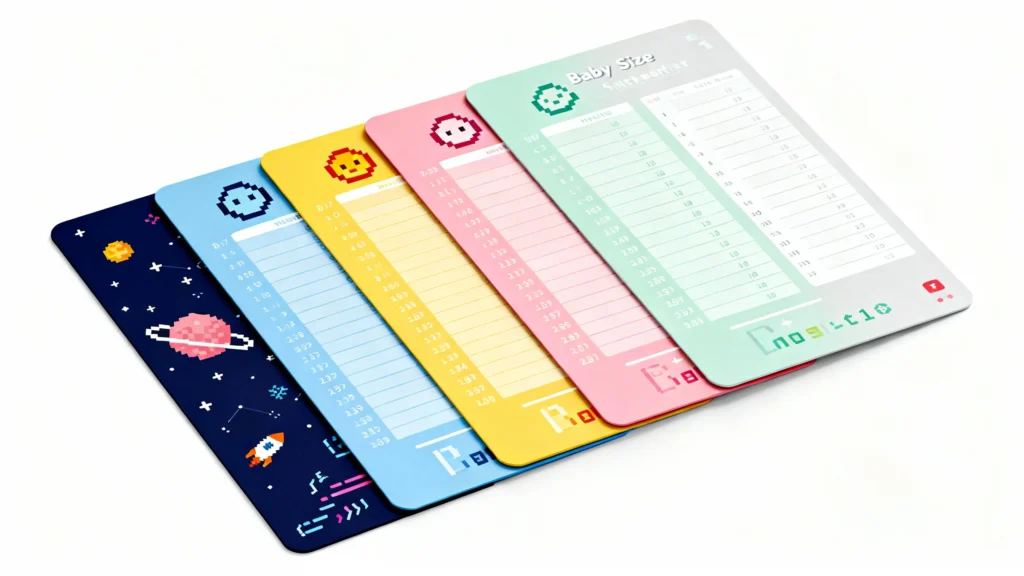
Decoding Baby Clothing Sizes: From Newborn to Toddler
Understanding baby clothing sizes is a bit like deciphering a secret code—one that changes as your little one grows at their own unique pace. Most baby clothes are labeled by age ranges, such as “0-3 months” or “6-9 months,” but these are only rough guidelines. In reality, brands base their sizing on a combination of weight and length, and there’s no universal standard across manufacturers. This means a “3-6 months” onesie from one brand might fit very differently than the same size from another [1].
The most reliable way to choose clothing is to check the weight and length recommendations on the tag or product description. For example, a typical “0-3 months” size is designed for babies up to about 12 pounds and 23 inches long, but always double-check the brand’s specific chart [1]. Some brands also offer “Preemie” sizes for babies under 6 pounds, and “Newborn” for up to 8 or 10 pounds. As your baby grows, you’ll see sizes like “3-6 months,” “6-9 months,” and so on, usually increasing in 3-month increments during the first year.
Fit matters for more than just looks. Clothing that’s too tight can restrict movement and irritate delicate skin, while oversized outfits may bunch up or pose a safety risk, especially during sleep. Look for features like expandable necklines, snap closures, and stretchy fabrics that make dressing and diaper changes easier. Many parents appreciate adjustable bodysuits and sleepwear with fold-over cuffs, which can extend the life of an outfit as your baby grows.
When shopping, consider how quickly babies outgrow their clothes—sometimes in a matter of weeks. It’s wise to have a mix of sizes on hand, especially during growth spurts. Some brands offer “grow with me” designs, such as adjustable rompers or pants with foldable cuffs, which adapt to your baby’s changing size. For milestone moments, look for outfits that are both comfortable and easy to photograph—think soft cotton, gentle seams, and playful prints.
Here’s what we love:
Clever Clothing Solutions
Diaper Sizing Demystified: Finding the Perfect Fit
Choosing the right diaper size is a science all its own, and it’s one of the most important factors in keeping your baby comfortable and dry. Unlike clothing, diaper sizes are determined almost exclusively by weight, not age. This is because babies grow at different rates, and a snug, leak-proof fit depends on your baby’s current size rather than their birthdate [2][5].
Most brands start with “Preemie” or “Newborn” sizes for the tiniest babies, then move up through numbered sizes (1, 2, 3, etc.) as your child grows. For example, a typical size 1 diaper fits babies from 8 to 14 pounds, while size 2 covers 12 to 18 pounds. You’ll notice that weight ranges often overlap between sizes, which can be confusing at first [2][5]. In these cases, consider your baby’s body shape—long and lean babies may do better in the smaller size, while chunkier babies might need to size up sooner [5].
It’s crucial to watch for signs that it’s time to switch sizes. If you see red marks on your baby’s skin, frequent leaks, or a diaper that doesn’t fully cover their bottom, it’s probably time to move up [2][5]. A well-fitting diaper should allow you to slip two fingers under the waistband and should not leave indentations on the skin. As your baby becomes more active, a secure fit helps prevent leaks and keeps skin healthy by reducing the risk of rashes.
For parents exploring cloth diapers, sizing can be even more flexible. Many modern cloth diapers are “one-size” with adjustable snaps or Velcro, allowing them to grow with your baby from infancy through toddlerhood. Swim diapers and training pants have their own sizing systems, often based on weight and sometimes on clothing size (like 2T-3T for toddlers) [2].
Don’t forget that babies go through a lot of diapers—up to 12 a day for newborns—so it’s smart to stock up gradually and adjust as your baby grows [2]. If you’re planning ahead, keep in mind that growth spurts can happen suddenly, and it’s better to have a few larger sizes on hand than to be caught short during a midnight change.
Parents are loving these:
Best Diapering Essentials
Beyond the Basics: Sizing for Special Baby Gear
While clothing and diapers get most of the attention, accessories and gear also come with their own sizing puzzles. Hats, socks, and mittens are usually labeled by age or a simple “newborn/infant/toddler” system, but as with clothing, it’s best to check the actual measurements. A well-fitting hat should cover your baby’s ears without slipping over their eyes, and socks should stay put without leaving marks on chubby ankles.
When it comes to baby carriers, proper sizing is essential for both safety and comfort. Many soft-structured carriers are designed to fit a wide range of body types, with adjustable straps and panels that grow with your baby. For newborns, look for carriers with infant inserts or adjustable bases to ensure proper support. As your child grows, you can transition to larger settings or toddler-sized carriers.
Wearable blankets and sleep sacks are another area where fit matters. These products are typically sized by weight and length, and a good fit ensures your baby stays warm without the risk of loose bedding. Look for sleep sacks with adjustable shoulder snaps or extra room for kicking, which can accommodate growth spurts and keep your little one cozy through the night.
Growth spurts can sneak up on you, so it’s helpful to periodically check the fit of all your baby’s gear. If a hat is leaving marks, a carrier feels tight, or a sleep sack seems snug, it’s time to size up. Many parents appreciate multi-size hats and convertible sleep sacks that adapt to changing needs, making it easier to keep up with your baby’s rapid development.
Worth checking out:
Smart Sizing Gear
Finding the right size for your baby’s clothes, diapers, and gear is an ongoing process, but it’s one that pays off in comfort, safety, and peace of mind. By understanding how sizing works and staying attuned to your baby’s growth, you can make confident choices that support every stage of their development. Here’s to happy, well-fitted adventures—one size at a time.
Sources
[1] Baby Clothes Sizes Chart and Guide — https://www.whattoexpect.com/first-year/baby-clothes-sizes/
[2] Pampers Baby Diaper Size Chart Guide — https://www.pampers.com/en-us/baby/diapering/article/diaper-size-and-weight-chart
[3] Baby Clothes Size Chart: A Guide to Baby Clothes Sizes — https://www.thebump.com/a/baby-clothes-sizes
[4] Breast Pump Flange Fit Guide: How to Find the Right Size — https://www.babylist.com/hello-baby/breast-pump-flange-fit
[5] The Ultimate Diaper Size Guide for New Parents — https://www.parents.com/baby/diapers/diaper-sizes-how-to-find-the-right-fit-for-newborns-babies-and-toddlers/