
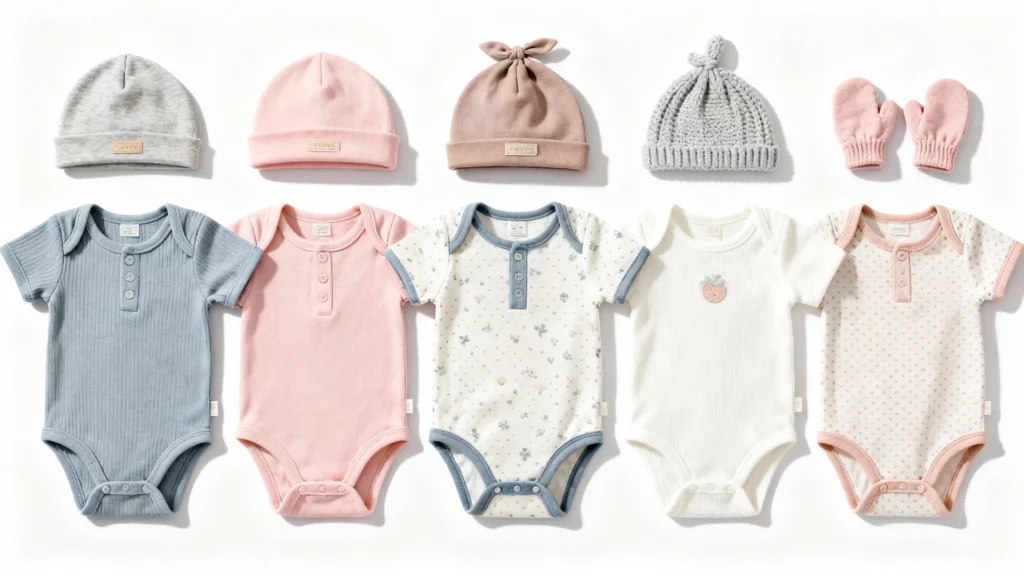
Understanding Newborn Clothing Sizes and What Fits
When you’re preparing for a new baby, the phrase “newborn size” seems straightforward—until you start shopping. Suddenly, you’re faced with a dizzying array of labels: NB, 0-3M, Preemie, and even “First Size.” The reality is that baby clothing sizes are more of an art than a science, and understanding how they work can save you both time and frustration.
Most brands base their newborn sizing on average birth weights, which in the U.S. is about 7.5 pounds, but healthy newborns can range from under 6 pounds to over 9 pounds at birth [1]. The typical “NB” or “newborn” size is designed to fit babies from about 5 to 8 pounds and up to 21.5 inches long [1]. However, some brands run smaller or larger, and there’s no universal standard—so a Carter’s NB onesie may fit differently than a Gerber NB bodysuit.
If your baby is born early or is on the smaller side, you may need Preemie sizes, which generally fit babies under 5 pounds and shorter than 18 inches [1]. On the other end, some babies skip straight to 0-3 months, which usually covers 8 to 12.5 pounds and up to 24 inches [1]. It’s not uncommon for a baby to outgrow newborn sizes within a couple of weeks, or even bypass them entirely if they’re born larger.
The fit of newborn clothes also depends on the style and fabric. Stretchy cotton bodysuits and kimono-style tops are more forgiving and can accommodate a range of shapes, while footed sleepers and zip-up pajamas may run snug. We’ve found that sleepers with fold-over cuffs are especially practical, as they keep tiny hands warm and prevent accidental scratches.
When it comes to onesies and bodysuits, look for envelope necklines or side snaps, which make dressing easier and minimize the need to pull clothing over a wobbly newborn head. For pants, soft waistbands and footed designs help keep everything in place without pinching sensitive skin.
Ultimately, the best way to ensure a good fit is to check the brand’s size chart and, if possible, compare measurements to your baby’s stats at birth. If you’re shopping before baby arrives, having a mix of newborn and 0-3 month sizes on hand is a smart strategy, since you won’t know exactly what will fit until you meet your little one [3].
Worth checking out:
Best Newborn Basics
Diaper Sizing: Why Weight Matters More Than Age
While clothing sizes can be confusing, diaper sizing is refreshingly logical—at least when you know what to look for. Unlike clothing, which is often labeled by age, diapers are sized by baby’s weight. This is because babies grow at different rates, and weight is a more reliable indicator of what will actually fit and prevent leaks [2].
Newborn diapers (often labeled “NB”) are typically designed for babies up to 10 pounds [2]. Some brands offer a “Preemie” size for babies under 6 pounds, while Size 1 usually covers 8 to 14 pounds [2]. There’s a bit of overlap between sizes, which is intentional—babies don’t always move up in a perfectly linear fashion, and some may fit comfortably in two sizes for a short period.
The key to a good diaper fit is coverage and comfort. The diaper should fully cover your baby’s bottom, sit just below the belly button, and fasten snugly without leaving red marks. If you notice frequent leaks, blowouts, or red indentations on your baby’s skin, it’s probably time to size up [2].
It’s also important to remember that newborns go through a lot of diapers—often 8 to 12 per day in the first weeks [2]. However, because babies grow quickly, you may only need a couple of packs of newborn size before moving up to Size 1. Stocking up gradually, rather than buying in bulk before baby arrives, helps ensure you don’t end up with a surplus of too-small diapers.
For parents planning to use cloth diapers, most “newborn” cloth options fit from about 6 to 12 pounds, but the fit can vary depending on the brand and style. Adjustable snaps and elastic leg gussets can help get a snug fit on smaller babies.
Finally, don’t forget about specialty diapers like swim diapers or overnight options. Swim diapers are sized differently and are designed to fit snugly without swelling in water, while overnight diapers may be slightly bulkier for extra absorbency [2].
Parents are loving these:
Top Diapering Essentials
How Much to Buy: Building a Practical Newborn Wardrobe
It’s tempting to stock up on adorable newborn outfits, but the reality is that babies grow fast—sometimes outgrowing newborn sizes in a matter of days or weeks [3]. The most practical approach is to focus on function and comfort, with just enough variety to keep laundry manageable.
For the first few weeks, most families find that 6 to 8 bodysuits or onesies, 4 to 6 sleepers or gowns, and 2 to 3 hats are sufficient [3]. Add a couple of pairs of soft pants, a few pairs of socks or booties, and a handful of swaddles or receiving blankets. If you live in a colder climate, a cozy cardigan or bunting is helpful for outings.
Since newborns can go through several outfits a day thanks to spit-ups and diaper blowouts, having a few extras on hand is wise. However, it’s equally important not to overbuy in the smallest size. Babies who are born larger or grow quickly may only wear newborn clothes for a week or two before moving up to 0-3 months [1][3].
When building your baby’s wardrobe, consider easy-access features like zipper sleepers, magnetic closures, and wide neck openings. These details make late-night changes less stressful and reduce the risk of waking a sleepy baby. Kimono-style tops are especially gentle on healing umbilical cords, as they don’t rub against the belly button area.
If you’re planning to breastfeed or pump, don’t forget about nursing-friendly tops for yourself and a few burp cloths for baby. For bottle-feeding, bibs and burp cloths help keep outfits cleaner for longer stretches.
For parents who love a minimalist approach, a capsule wardrobe of mix-and-match basics in neutral colors can be both practical and stylish. This makes it easy to rotate pieces and ensures everything coordinates, even when you’re running on little sleep.
Ready to shop?
Practical Wardrobe Staples
Gear and Accessories: Finding the Right Fit for Newborns
Beyond clothing and diapers, newborns need a few key accessories and gear that also come with their own sizing considerations. From hats to mittens, and even breast pump parts, getting the right fit can make a big difference in comfort and safety.
Newborn hats are typically sized for heads measuring 13 to 15 inches in circumference, which fits most babies at birth [1]. Look for soft, stretchy fabrics that won’t irritate delicate skin. Mittens are helpful for preventing accidental scratches, but make sure they’re snug enough to stay on without being too tight.
For baby carriers and wraps, check the manufacturer’s guidelines for minimum weight limits—many are designed for babies as small as 7 pounds, but some require inserts for proper support. Swaddles and sleep sacks also come in different sizes; newborn options usually fit babies from 6 to 12 pounds, but always check the length and weight recommendations to ensure a safe, snug fit.
If you’re planning to pump breast milk, the flange size on your breast pump is crucial for comfort and efficiency. Flanges that are too large or too small can cause discomfort and reduce milk output. Most pumps come with a standard 24mm flange, but many parents need a different size. Measuring your nipple diameter and consulting the pump manufacturer’s sizing guide can help you find the best fit [4].
When it comes to pacifiers and bottles, look for products labeled “newborn” or “0+ months.” These are designed with smaller nipples and slower flow rates to match a newborn’s feeding abilities. As your baby grows, you’ll transition to larger sizes and faster flows.
Finally, don’t forget about car seat sizing. Infant car seats are designed for babies from about 4 to 35 pounds, but proper fit is about more than weight. The harness should fit snugly at or below the shoulders, and there should be no more than one finger’s width of slack at the collarbone. Always follow the manufacturer’s instructions for installation and use.
Here’s what we love:
Smart Newborn Gear
Welcoming a newborn means learning the quirks of baby sizing, from clothes and diapers to gear and accessories. By focusing on fit, comfort, and a bit of flexibility, you’ll be ready to meet your baby’s needs from the very first day. We hope this guide helps you feel more confident as you build a wardrobe and gear collection that actually fits—so you can spend less time guessing and more time enjoying those first precious snuggles.
Sources
[1] Baby Clothes Sizes Chart and Guide — https://www.whattoexpect.com/first-year/baby-clothes-sizes/
[2] Pampers Baby Diaper Size Chart Guide — https://www.pampers.com/en-us/baby/diapering/article/diaper-size-and-weight-chart
[3] How Many Newborn Baby Clothes Do I Need (and in What Sizes)? — https://www.babylist.com/hello-baby/how-many-baby-clothes-do-i-need
[4] Breast Pump Flange Fit Guide: How to Find the Right Size — https://www.babylist.com/hello-baby/breast-pump-flange-fit
[5] Baby Clothes Size Chart: A Guide to Baby Clothes Sizes — https://www.thebump.com/a/baby-clothes-sizes